28 January, 2010

Poutine

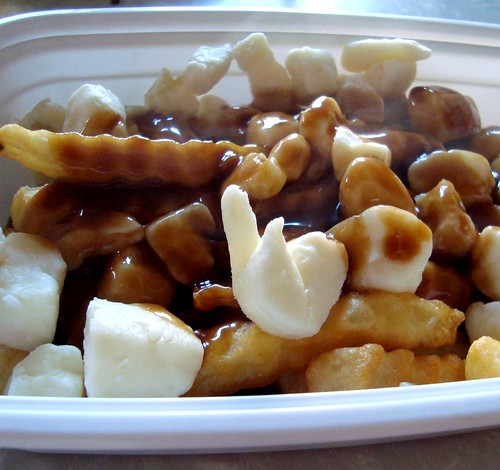
French fried potatoes. Cheese curds. Brown gravy. Three simple ingredients, none of which are all that remarkable on their own. And yet, when hot fries are scattered with cheese curds and lovingly blanketed in gravy they transcend their humble selves and become poutine - perhaps Canada's single greatest contribution to the culinary world.

Poking around the local P-Chops a few days ago, I found something almost unheard of here in Connecticut: Cheese curds! Put up in tubs by New York State cheese company Yancy's Fancy, this particular variety of curd were pale yellow - nearly white - curdly chunks of unaged mild cheddar. I immediately bought them along with a bag of frozen crinkle-cut fries, took them home, and made poutine.

Poutine preparation is simple. Deep-fry your potatoes and quickly drain them. While they're still hot, tumble them onto a plate, or better yet into a medium-sized ramekin that can hold your chosen serving size. Scatter the hot fries with a handful of cheese curds and ladle over with hot gravy. Brown gravy is traditional, but use whatever you have (personally, I prefer a good pork gravy.) Then, grab a fork and OM NOM NOM.

If you can get your hands on some cheese curd, try it out. Seriously. You won't be sorry.
.

26 January, 2010

Farmland Sausage Links: A Dollar Store Breakfast Treat


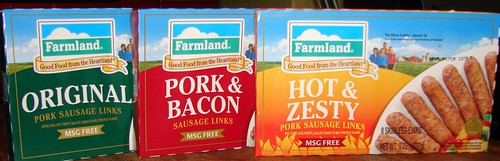
Dollar Tree recently had a selection of Farmland brand sausage links in 8-ounce packages. Buying them seemed a good idea at the time - the price worked out to just two dollars a pound, and Farmland isn't a bad brand - their deli ham is decent, and there's nothing wrong with their bacon.

I first started having misgivings, though, when I opened up the packages and found that they were "skinless" sausages, not links. Links should be in casings, twisted into individual sausages and linked together. That's why they're called "links," Farmland, get it? No, these were extruded cylinders of bumpy stuff bearing a strong resemblance to those nasty "brown and serve" things they sell in the supermarket.

Although leery of them by now, I fried them up anyway.

Original were fairly standard-tasting, with typical spice and herb aromas and flavors. The texture was bad, though: spongy and soft and oozy.

Pork and Bacon had an amazing bacon flavor and such an intense bacon aroma as it was cooking that the whole house smelled delicious as I made breakfast. They were the best of the three, though still somewhat hampered by the off-putting texture.

Hot and Zesty smelled wonderful as we cooked them, but unfortunately the spiciness was provided by cayenne pepper, which added a rough and scratchy heat without enhancing the flavor of the sausage in any way. That meant two strikes against this flavor because of that texture issue again.

In the time since I first tried these sausages, Farmland seems to have discontinued the Pork and Bacon flavor, and introduced several others (Honey & Maple, Cider House, and Lower Sodium) which I haven't had an opportunity to try. I think they have a great concept here, and for the most part the flavors are spot on (well, except for the misplaced heat in the Hot & Zesty) but the mouthfeel and sponginess of the final product just puts me off of them. I have no idea why they should be like that, since there aren't any fillers or junk listed on the ingredients list, but despite the evident quality of the ingredients, I can't recommend them.

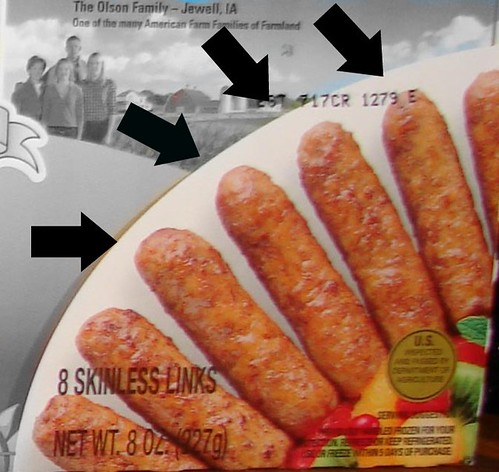
You might want to look for them in the supermarket anyway, though, because of the box art. Check out this closeup of one of the boxes and tell me what those sausages look like. Especially the ones I've pointed out with arrows.

.

25 January, 2010

Making Bresaola

On Saturday, I headed over to the local wholesale/retail meat market to buy a whole pork belly. I want to make some pancetta, and I still have plenty of room to hang stuff in my curing room in the attic. Unfortunately, there were no bellies available that day; I'll have to check back later in the week.

But they did have whole beef eye round for the very reasonable price of $2.29 a pound (untrimmed) and so I decided to make bresaola instead. In much the same way that my capicola is a cured and aged whole boneless pork loin, bresaola is a cured and aged whole eye round.

The process is somewhat longer, though. For one thing, the curing process is longer - my capicolas are only left in their salt cure for 2 days. The beef stays in its cure for 10 to 14 days. Following Ruhlman & Polcyn's method, I'll be draining off the first accumulation of brine after 5 to 7 days, then reapplying fresh brine to finish the aging for another week. After that, I'll be casing the beef in a natural beef bung cap casing, just like my cappy, and hanging it to age for a month or two...or longer, depending on how it goes. This is a learning process for me, and it's the first time I've ever tried making bresaola. So, welcome to the first steps and I hope you stop back every so often as I update and monitor the beef's progress.

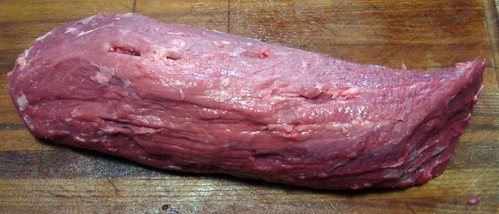
This is the eye round I started with, right out of the cryovac. Untrimmed, it weighed in at about 6½ pounds. Before I can start curing it, I'll have to trim off all the visible fat and any silverside that is still on it.

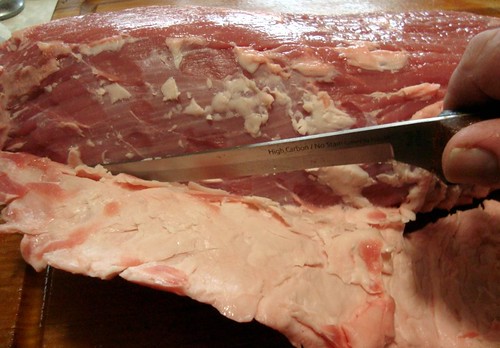
Trimming the round is fairly simple. I use a good sharp boning knife with a narrow blade, and pass it between the fat cap and the meat, in the same direction as the grain of the muscle. If there is any silverside, I just pull it away from the meat and use the knife in the same way as when I remove the fat. Small bits of fat or silverside might remain, but those are easily removed with small trim strokes.

All trimmed and ready for the cure, the round is down to a little shy of 6 pounds. At this point, I set it aside and made up the cure.

For the cure ingredients, I knew that I'd want salt, sugar, and InstaCure #2 ("pink salt") as a minimum, with perhaps some other aromatic ingredients to taste. After researching several recipes, I came up with the following proportions, which makes enough cure for up to an 8-pound round. Note that I am giving the amounts in metric weights rather than my customary American method of teaspoons/tablespoons. I did this to avoid clumsy measurements like "1/8 teaspoon" etc. and fractions of ounces. Decent digital scales are available for ten dollars or less online and in many stores, and nearly all of them can be toggled between ounces and grams.


Dave's Bresaola Cure
Sufficient for 8 pounds of beef

50 grams Kosher salt
60 grams sugar
10 grams InstaCure #2 ("pink salt" )
10 grams ground black pepper
15 grams fresh rosemary leaves, finely chopped
12 grams dried thyme, crushed
12 juniper berries, ground in a spice or coffee grinder

Combine all ingredients thoroughly until evenly distributed.

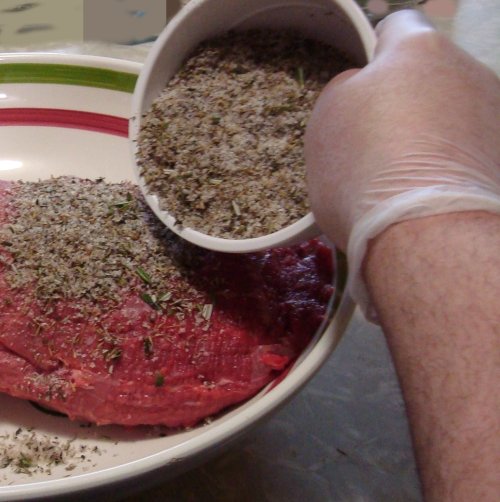
Once the cure was made up, I put the round into a large shallow bowl, pulled on a pair of vinyl gloves to protect my hands, and went to work rubbing the cure into the meat. I rubbed the entire round with the cure, making sure that all of the meat was covered. It only took a couple of minutes, and I had some cure left over when I was done (which I put away in a jar for next week. Saving the leftovers means I won't have to mix so much when the cure gets reapplied.)

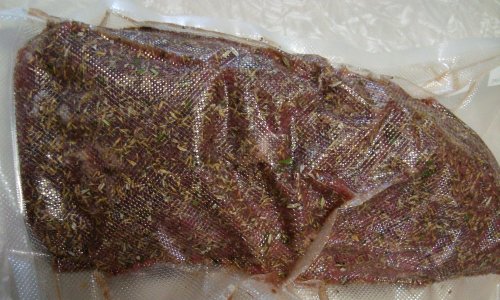
When the meat was thoroughly coated, I sealed it in a cryovac pouch using my vacuum packer. If you haven't got one, don't sweat it. Use a big ZipLoc bag and push as much of the air out of it as you can when you seal it up. Check it out: the meat had been for less than five minutes when I sealed it, and the cure had already begun to pull juices out of the meat to form a brine:

Right now the curing beef is sitting on the bottom shelf of my fridge. Every so often - whenever I open the fridge for something - I turn the bag and give it a quick massage. I'll be doing that for the next week. Sometime over the coming weekend, I'll open the package, rinse and dry the round, and apply fresh cure. Check back with me later and follow the progress.

.

24 January, 2010

Vintage Sunday: A Half Gallon of Ice Cream

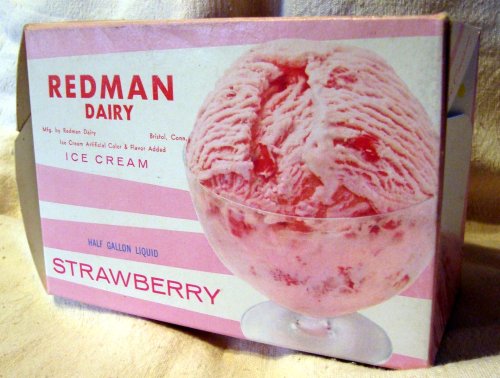
Remember when ice cream came in foldable cardboard cartons that held half a gallon? I do. It's only been a couple years since ice cream got hit with the Supermarket Shrink Ray.


Anyway, these two ice cream cartons date from 1956. They're "new old stock" from the former Redman Dairy, which was at 384 Farmington Avenue in Bristol CT for more than 50 years (today the location hosts a bicycle shop.) Both of the cartons are brand new and were originally unfolded, just like they would have been before filling at the dairy. I folded the strawberry carton carefully, just enough so it could pose for the photo.

Although Redman Dairy is long gone, a small piece of it survives. The original 1940's-era soda fountain is still in operation at the Imagine Nation Children's Museum in Bristol.

Link:

Imagine Nation Children's Museum website.


.

23 January, 2010

Fishy Delights 27: Bar Harbor Wild Herring Fillets

I can't believe that it's taken me this long to write about Bar Harbor Foods' canned products; they are a pantry staple for me, especially the chowders and canned fish, and since this is the 27th entry in my "Fishy Delights" series, you'd think that I would have gotten to them sooner.

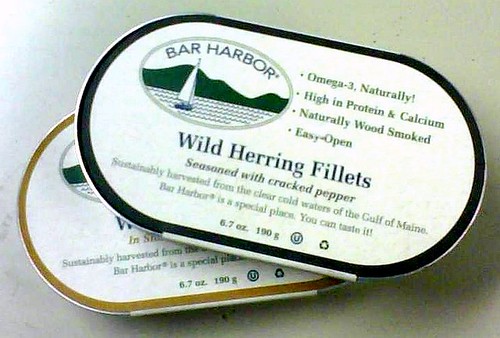
Anyway, today's review covers two of Bar Harbor Foods' Wild Caught Fish varieties: Wild Herring Fillets Seasoned with cracked pepper, and Wild Herring Fillets in Stone Ground Mustard Sauce. Both offer big meaty herring fillets and all-natural ingredients.

Wild Herring Fillets Seasoned with Cracked Pepper are delicious, with a lightly smoked flavor and lots of relatively fine-grained cracked black pepper. The pepper's natural fruitiness compliments the fish very well, and the spice comes through without being overwhelming. I loved them as is for lunch, but I'm betting these would be an awesome alternative to tuna in a salad-sandwich filling.

Wild Herring Fillets in Stone Ground Mustard Sauce are just as good. The mustard sauce wasn't harsh or obtrusive - again, it complimented the fish nicely without overpowering it. As with the cracked pepper fillets, I ate these as is for lunch, with some sesame flatbread crackers and paper-thin onion slices on the side. Excellent.

I've got some other Bar Harbor stuff to review as well, thanks to a sale at my favorite discount store, Ocean State Job Lot, and I'll try to get to them over the next few weeks.

Link:

Bar Harbor Foods website. The site includes a search page where you can find a store in your area carrying their products.

.


21 January, 2010

Soup In A Tube

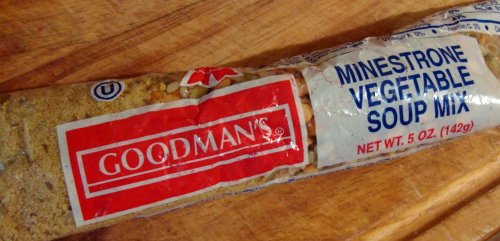
Awhile ago I bought a bunch of soup mixes packaged in cellophane tubes. I had almost forgotten about them until a couple days ago when I discovered them lurking in the bottom of an airtight container in the pantry. Because it was a cold and rainy day that afternoon, I figured it was a good time to try one out.

This particular variety, Goodman's Minestrone Vegetable Soup Mix, was the first one that came to hand when I reached into the tub, so that's the one that got cooked up.

Goodman's Minestrone is rather unlike any other minestrone I've had. It's got macaroni, yellow peas, corn, some dehydrated veggies, and lots of rice in the mix. Despite the difference from more traditional minestrone soups, it was very tasty and enjoyable and made a great lunch.

The prep was pretty simple - just boil some water, add the soup mix, and simmer until done - and I have to admit it was as good as any other packaged mix I've ever had. While that sounds like "damning with faint praise," I can assure you it really isn't. I enjoy many kinds of packaged soup mixes, especially Lipton's chicken noodle varieties, and I'd be happy to pick up more Goodman's soups to have on hand for quick soup fixes.

.

19 January, 2010

Capicola 2010

It's that time of year again - even though I'm about a week or so later than last year - and the pork loins are hanging in my attic curing room, slowly and magically turning into capicola. You can refer back to this post from last year as a starting point if you'd like to see how to make your own, step by step. This time around, I'm only going to go over some changes we made in the process.

Also, I'd like to thank the many people I've corresponded with via email, and who've shared their own methods and memories about curing capicola.

One of the changes we made this year was in the way we season our hot capicola. Traditionally, sweet capicola is made by coating the loin with coarsely ground black pepper before casing them and hot capicola is made by coating the pork with powdered cayenne or other hot red pepper. But cayenne pepper is not a big favorite of mine; in my opinion, it gives heat without lending flavor and I've never been a fan of heat for heat's sake. So my friend Roger and I developed a hot seasoning that would give a pleasant burn and also allow the flavor of the peppers to enhance the concentrated porkiness of the cured capicola.

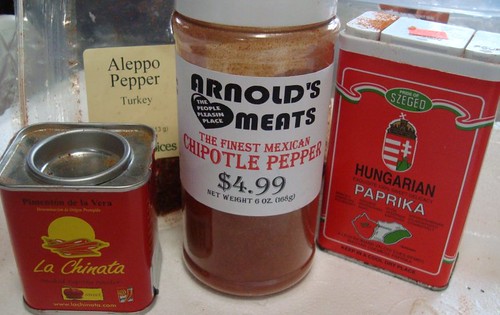
We started with about a quarter cup of coarsely ground black pepper, which was left over from coating the sweet cappies. That will give a fruity base to seasoning and means we won't be wasting any leftovers (which I don't keep after having raw pork rolled around in it.) Then we added about 3 ounces of chipotle pepper powder, 1/4 cup of imported Hungarian paprika (we used sweet for flavor, but you could use hot for an extra kick,) a little over an ounce of smoked imported Spanish paprika, and a handful of coarsely ground Turkish Aleppo pepper (a lit like crushed Italian red peppers, but a bit moister and with a much richer red-pepper flavor.) Measurements are approximate because I cook as much "by eye" as I do "by spoon." As with any other ingredients, quality is key. Buy the best spices you can afford. My favorite sources are Penzey's (where I got the Aleppo) and Nutmeg Spice Company (which puts up big canisters of spices for many different markets such as Arnold's Meats, where I bought the one shown above.)

The other change we made this year was in the actual process of putting up the capicola itself. First off, we didn't use butcher's string to tie off the casings at the ends. We used small plastic wire-ties. They gripped the casings quite effectively and were much easier and tighter than string.
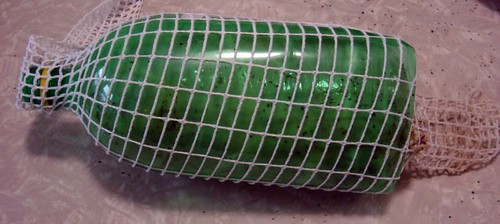
We also used elastic netting over the casings, rather than wooden slats, to provide compression as the capicola cures. Several readers wrote in and told me they get great results with the netting, so I ordered a roll of it and we're trying it out. There's a trick to getting it over the capicola, though - you need some sort of tool to do it, because it's nearly impossible to just pull it over the cased meat like a sock.

I cut the bottom end off of a 2-litre plastic soda bottle. To wrap the capicola, we put each capicola into the bottom of the bottle and pulled the elastic over the tapered end. Then we tied off the bottom end of the netting and pulled the bottle out the other side, leaving the capicola perfectly encased in the elastic web. This took about half the time that it would have taken us to strap them. We left extra at the top end to curl around to accomodate a hanging hook.

I hope the texture comes out as well as it does with the straps. It should - the netting provides compression evenly over the entire ham, while the slats concentrate the pressure at four points.

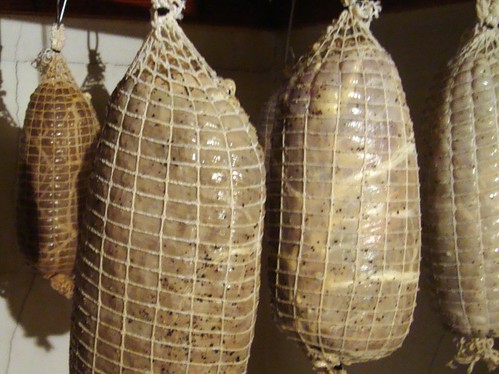
At right you can see the capicola, hanging deliciously in the curing room. We'll visit them periodically to see how they're doing, just like we did last year.

Links:

Penzey's Spices - You owe it to yourself to pay them a visit; one of the best selection of high-quality herbs and spices anywhere. I've been buying stuff from them since before the internet!!

Nutmeg Spice Company - A local Connecticut company that provides exceptionally hig-quality merchandise under both their own label and custom grocery-store and other private labels in New England. I've never had a bad experience with them.

17 January, 2010

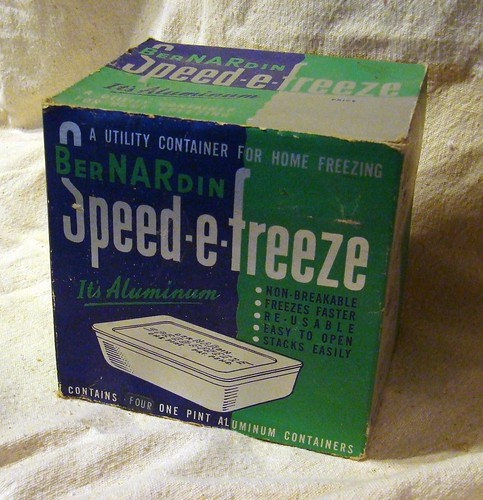
Vintage Sunday: Bernardin Speed-E-Freeze Containers

Bernardin Speed-E-Freeze aluminum containers are another of those once-popular household items that today are nearly forgotten.

The Bernardin Bottle Cap Co. of Evansville Indiana marketed them as the ideal freezer containers when they were introduced about 1950. Their lightweight aluminum construction allowed foods inside to freeze quickly; the lids were recessed so that stacked containers were stable, and the slight taper to the sides allowed cold air to circulate freely around the stacks. And they were airtight. The lids snapped on tightly and needed to be pried off (inserting a dime in the small slot between the container and the lid and giving it a twist was enough.)

Bernardin had a whole list of alternative uses for the Speed-E-Freeze tubs. They suggested them for rustproof hardware and small tool storage, small baking pans, and even a pocket-sized tote for lures and fishing flies.

In 1950, this box of four pint containers with lids cost $1.40 and were competing against storage alternatives such as heat-sealable cellophane-lined cardboard boxes, polyethylene freezer bags, and even heavily-waxed paper tubs - all of which were a fraction of the cost (though not reuseable.) Convenience eventually won out over economy, and by the mid 1960s cheap plastic containers - especially single-use plastic bags - had virtually replaced almost every other kind of freezer container.

Today, Bernardin Speed-E-Freeze containers occasionally show up on eBay and at rummage sales, most often as single items but occasionally as sets, complete with boxes and instruction sheets.

speed e freeze 4

.

16 January, 2010

Sadness at KFC

Well, it's over.

On December 31, KFC quietly pulled the Double Down sandwich from the menu in their Providence RI test market. We found out because we had planned a road trip to the Westerly KFC on US1 this weekend. Just to be sure Double Downs were going to be available, Lynnafred phoned first.

LYNNAFRED: "Hi. I was wondering if you've still got Double Downs on the menu? Some friends and I were planning to stop in this weekend, but it's a long drive so we thought we'd call first."

KFC: "Um...I have to check. Where are you calling from?"

LYNNAFRED: "Enfield, Connecticut. We're about an hour and three-quarters away."

KFC: "Hahaha, wow, really? [pause] No, sorry, we stopped serving those on December 31. Seriously, you were going to drive that far for a Double Down? That's hardcore."

We're going to miss it. The Double Down was, quite simply, the single most badass sandwich in the fast food industry.

.

15 January, 2010

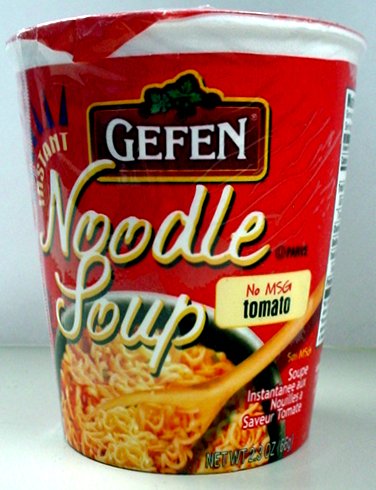
Ramen Review 14: Gefen Instant Noodle Soup - Tomato

I found these ramen noodles at a local bargain emporium and decided to give them a try. The cups are slightly bigger than the standard Nissin Cup Noodles, and they were 85 cents apiece - sounds cheap, but I get Cup Noodles 12 for $4.95 at the Asian market, making 85 cents pretty costly for instant soup.

Ease of Preparation: 8/10 - Most ramen cups require only the addition of water. Gefen wants you to add water and stir. Wait 2 minutes, then add contents of seasoning pack; stir again and wait another 2 minutes. I'm not sure what the extra step is for, or why the seasoning can't go in right at the start as with other ramen cups. Seems unneccessarily fussy to me.

Vegetable Pouch: N/A - Any vegetables in this meal are powdered and included in the seasoning.

Seasoning Pouch: 4/10 - A small pouch with a picture of a tomato on it; not very tomatoey; tastes more like salt, celery, and onion

Taste: 4/10 - Somewhat nasty, like extremely cheap bouillon with extra salt. I never would have guessed this was supposed to be "tomato soup" if it didn't have it on the label. The broth is thin and kind of brownish-red and lacks any real flavor. The noodles hold up well in texture, but had a slightly rancid "old oil" flavor to them despite the cup being well within it's "sell by" limit.

Spiciness: N/A - This isn't marketed as a spicy ramen.

Overall: 5/10 - Acceptable as an emergency ration only. If you're stuck with one, keep it in your desk at work for those times when you get caught working late and need a snack to hold you over until you can find real ramen.
.