Showing posts with label lobster. Show all posts

05 August, 2012

Low Priced Lobsters...Maybe.

You may have been hearing about record low lobster prices - reportedly as low at $1.25 a pound in some unnamed places - and figured it might be a good time for buying some bugs. But you need to be aware that these low prices are the ones being paid by wholesalers to the fishermen, and the savings aren't always being passed along the chain of middlemen to retail buyers like you, visiting the lobster pound or shopping at the fish market.
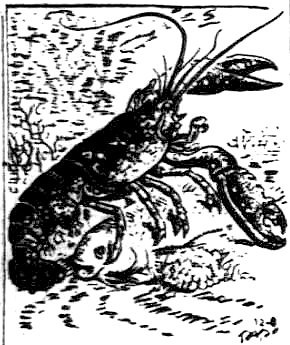
My wife Maryanne and I recently took a drive up the southern Maine coast from Kittery to a little north of Portland. The news had been reporting lobsters at record low prices, and we thought we'd combine a pleasant day trip with some bug buying (cryovac'd or packed tightly in freezer containers, cooked lobster meat freezes well, and if prices were really as low as the chatter indicated, I figured we'd buy a dozen or so lobsters to cook, pick, and freeze.)

Prices for lobsters vary widely, and if you're a New Englander hoping to get some really cheap bugs at the shore, you may be just as well off buying lobsters on sale at your local supermarket. In my area, over an hour inland, lobsters are running on sale at $4.99 a pound - and despite everything you might have heard on the news, that's about what you're going to pay at the lobster pounds in Maine.

There are three terms you need to be familiar with when you're buying lobster at a pound:

Culls - These are lobsters that have lost one of their large claws.

Soft-shells - Lobsters moult annually, losing their hardened shells and growing a new one. The new shell is thin and soft enough to be torn away with your fingers - no crackers needed! - but it is also much larger than the meat inside, because the lobster needs enough room inside the new shell to grow for the coming year. Just remember that when you buy a soft-shell lobster, there's not as much meat inside as it looks.  Check out the picture at left: I took a photo of a soft-shelled lobster claw against a bright light. The dark area in the shell is the shadow of the meat the shell actually contains.
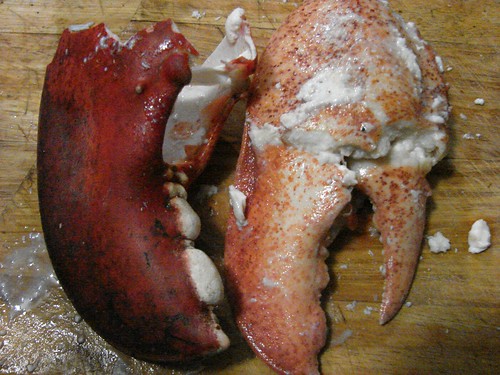
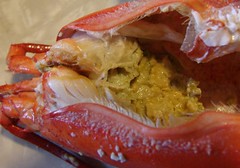
Hard-shells - Lobsters contain the most meat when their shells are thick and hard - they have grown into the shell they created when they last moulted. Lots of meat, but it's more difficult to get out because the shell is thick and hard and needs to be cracked open with a cracker or even a crab mallet.  Here's a picture of the meat from a hardshell claw.  See how much larger it is, and how it fills the shell? But you can also see that the shell was about ¼-inch thick - I needed a hammer to get into it!


Okay, lesson over - back to the story about lobster prices. We found that the lowest prices - anywhere from $2.99 to about $4 a pound - were for small, soft-shelled culls weighing about a pound, and for small whole lobsters up to about 1¼ pounds.

Pound-and-a-half lobsters - the size you most often find in restaurant lobster dinners - were ranging from $3.75 to about $5 a pound for softshells.

As the sizes got larger, the prices increased steeply. One lobster pound in Portland, ME started their prices at $7.95 a pound for small softshells.

No matter where we were, hard-shell lobsters were about a dollar a pound more expensive.

Our biggest surprise, though, was the price of lobster dinners in restaurants, which averaged about $16.95 with a couple of places charging upwards of $24. Clearly, diners are not seeing the benefits of the lower lobster prices on the dock.

If you're heading for the coast in search of a New England Shore Dinner, welcome! You will find some good deals if you take some time and look around.


20 December, 2011

Lobster Slider Patties

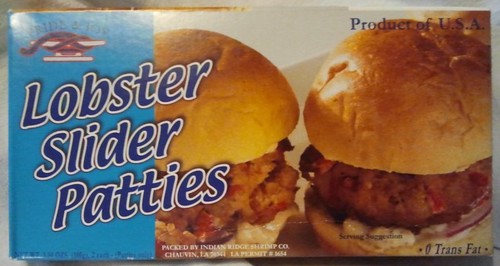
I was poking around in the frozen food section of Dollar Tree and found these: Lobster Slider Patties. How awesome to find something as expensively gourmet as lobster at such a reasonable price! Even though the box felt kind of light, still: LOBSTAH FOR A DOLLAH! I knew it must be true, because "Lobster Meat" was the first ingredient listed on the side panel Yea, though I paid a pauper's coin for this delight, verily I would dine like King Neptune this night.

Of course, there was other fine print on the label, like on the front where it shows a photo of two plump and delicious lobster slider patties on fresh rolls with some kind of mayo peeking out from the bottom.  Superimposed over the bottom of the righthand sandwich, in a typeface so tiny it is barely readable by the naked eye, is the advisory: "Serving Suggestion." This is a marketing term which loosely translates as "What you're seeing here isn't exactly what you're getting in the box."

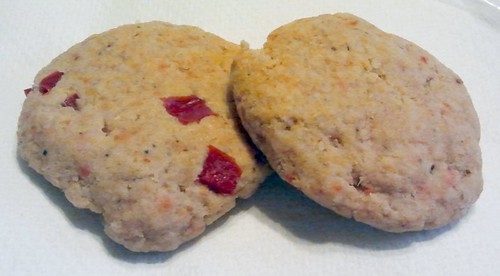
When the box was opened, we found two "patties," sans bun (that was part of the "Suggestion," and the box was after all clearly labeled "Slider Patties" without any mention of buns.) They were about the size and shape of a chocolate-chip cookie, and looked like they had been hand-formed.

The cooking instructions strongly suggested baking the patties in the oven, mentioning that it was superior to the micowave. Instead, I opted to pan-fry them in butter. Besides the fact that pan-frying adds a delicious crispy crust to the bottom and top, I was also not about to run the oven for two tiny little dollar-store patties. So into the pan they went, sizzle-sizzle-sizzle, and out they came to a plate a few minutes later, exactly as anticipated: crispy and browned on the top and bottom, soft and hot inside.

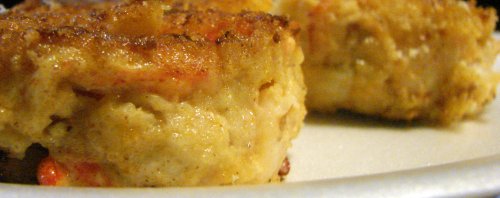
We broke bits off and examined them. They are definitely made primarily of lobster meat and crumbs, exactly as the ingredient label states. (The red pieces you see in the photos are bits of red bell pepper that appear to be added as a garnish.) But don't look for chunks of lobster, because you won't find it. Look carefully at the lobster patty chunk on the end of your fork, and you'll see the meat: tiny little fibers that are the last remaining bits of salvageable meat from the lobster after all of the choice bits have been taken for other purposes. Note, however, that there was no way for us to really tell what kind of "lobster" it was. It could have been Maine lobster, or langostino "lobster", or lobster tails for all we could tell.

At any rate, it didn't matter. The patties passed the most important test: they actually tasted good. They had a decent shellfishy flavor and a smooth, if a bit wet, texture that was reminiscent of the stuffed clam filling one might find in a restaurant. A few dashes of hot sauce pepped up the patties and brightened the shellfish flavors.

I don't really think I'd serve these as "sliders," on a little hamburger roll. That would be way too much like eating a bread sandwich (I'll have a whole wheat on rye, hold the pumpernickel please.) But if I had some little sausage patties on biscuits, these lobster patties would be awesome snuggled in there against the pigmeat.

So I might not have dined like King Neptune, but I liked the lobster patties well enough. A buck well spent.

30 July, 2011

LOBSTER!

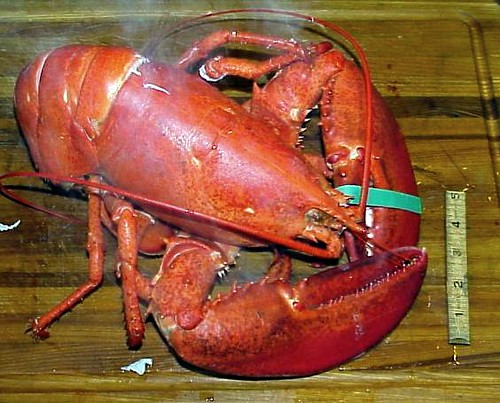
My 4½ pound bug
Shop-Rite had lobsters on sale this week - $6.99 a pound with your Shop-Rite card, $5.99 a pound with your card and a coupon from the flyer.  The smaller lobsters were all softshells, which meant that they had recently moulted and would have less meat within - the tradeoff being that the meat often has a sweeter and more delicate flavor.

I selected a 4½-pounder from the tank and found out that the coupon wasn't good on the really big bugs - only on the smaller ones - but when all is said and done, $6.99 a pound is still decent for a 4-plus pounder.  I don't often buy small lobsters to cook at home any more - none of us really care if we get individual lobsters, and I wind up making lobster rolls, lobster cakes, or just warming up the meat in a pan of hot melted butter and serving "lazy lobster."

The amount of meat inside a lobster varies. Softshells have the least amount of meat in relation to the size of the shell because they have recently moulted and the new shell has to give the creature enough room to grow inside.  Hardshell lobsters have the most amount of meat in relation to the size of the shell because the bug has already grown to fill the shell and will be moulting again soon. Larger lobsters have a somewhat better ratio of meat to shell and it's a lot less work to shell one big one than it is to shell a bunch of smaller ones. So, if you're buying lobster to serve other than "in the rough," or for a recipe that will serve several people, you're better off buying a big lobster and cutting it into chunks than you are buying several small ones.

There is a myth that large lobsters are "tougher" than small ones.  This isn't really true; if they're cooked correctly, a big lobster can be tender and delectable.  I think people have a tendency to overcook large lobsters because they think that a great big lobster has to be cooked a lot longer than a small one.  I always steam my lobsters (it's more efficient and, in my opinion, gives the cooked product a better flavor) and I do it this way:

  1. I use a large roasting pan with a rack in the bottom and a lid.  I put a couple inches of water in the bottom of the roaster and put it over high heat on the stovetop.
  2. When the water is at a full rolling boil, I put in the lobster(s), on their back, onto the rack and cover the roaster tightly with its lid
  3. Lobsters should steam for 13 minutes for the first pound, plus 3 minutes per pound for every pound thereafter.  So, my 4½-pound bug steamed for 23 minutes and it came out awesome. (13 minutes for the first pound + 9 minutes for the next three pounds + 1½ minutes for the last half pound = 23½, rounded down to 23 minutes for the hell of it. Who's kitchen timer measures in half-minute intervals anyway?)
  4. Take the bugs out of the steamer, set them in a bowl, and allow them to cool for a few minutes before serving or shucking.
I got about a pound and a half of lobster meat from the 4-and-a-halfer, plus half a cup or so of tomalley and some white lobster fat (I chill the tomalley and fat, then blend them together and use them for a spread on toast for breakfast - or you can use tomalley to flavor melted butter for popcorn.)  I used the meat to make foot-long lobster rolls.

This is a "hot" lobster roll, made with lobster meat and melted butter.  A "cold"
lobster roll is made with lobster meat and mayonnaise. Usually, I make the mayo
version, but I didn't have enough mayo in the house for a bunch of footlongs, so
this time I made the butter version instead.
Incidentally, there seems to be quite a controversy about lobster rolls.  No matter where you go in New England, a lobster roll is usually a top-sliced hot dog role piled high with dressed lobster meat. The disagreement centers around what the meat is dressed with. In Connecticut, it is most common to find "hot" lobster rolls, dressed with melted butter.  In most other maritime New England states, "cold" lobster rolls are found, dressed with mayonnaise.  Butter purists claim that adding mayo makes it "lobster salad" not a "lobster roll;" meanwhile mayo fans know that mayo rolls are everywhere in Maine (aka Lobster HQ) and if mayo is delicious enough for Maine it's delicious enough for them too.

Personally, I enjoy lobster rolls both cold and hot. But when I make them at home, I usually make cold lobster rolls, dressed with mayo, because that's what I usually had when I was growing up in Massachusetts.  I'd be interested to learn which way you prefer your lobster rolls - let me know in the comments.


22 September, 2010

Everything Likes To Eat Lobster. Even Lobsters.


Lynnafred took this pic of a lobster in the tank at Waldbaum's in West Hartford.  He was right in the middle of chowing down on his cellmate, whose partially-eaten corpse may be seen, belly-up, in the lower left corner of the picture.  Notice that the lobby has enough strength in his left "crusher" claw to open up a little despite the rubber band supposedly holding it shut.  That's just enough to be able to get a grip on an opponent who's too weak to resist.

You may not know it, but that is the real reason why lobsters are marketed with their claws held shut by rubber bands.  Fishermen already know how to handle lobsters without getting pinched.  Wholesalers and retailers really don't care all that much if some mook poking the bugs gets a claw-induced blood blister.  No, they clamp the claws because in the stress of the overcrowded holding tanks, the unfed and agitated lobsters turn on one another and would tear each other apart before they can be sold.
.

18 August, 2010

Sardine Cannery To Reopen Processing Lobster

Back in February, I wrote about the closing of the last remaining sardine cannery in the US.  Bumble Bee Foods, citing a reduction in US herring catch limits, shut the former Stinson Cannery in April.  It was a big blow to the town of Prospect Harbor, where unemployment is high.  It was big news at the time - sardine canneries were once a huge part of the New England economy, especially in Maine - and the story was widely reported at the time.

The former Stinson cannery is in the news again, although this time it's not attracting nearly as much attention (probably because it's good news this time.)  Live Lobster Company of Chelsea MA has agreed to purchase the plant with an eye toward expanding its operations into processed lobster.

For now,  the company wants to use the plant as a purchasing station for locally-caught bugs, and they want to begin operations as soon as possible with lobster buying and bait sales.  The company's primary business is live lobster wholesaling to customers in Europe, Asia, and the United States, but the availability of the cannery has presented them with an opportunity to expand into processed lobster sales.

Eventually, Live Lobster Co. expects to have about 130 employees at the Prospect Harbor plant (the same number of jobs lost when Bumble Bee moved out.)  And because the lobster catch is seasonal (June through November) they plan to expand into shrimp and crab canning as well, to keep their employees working year-round.

Links:


14 June, 2010

6-Pound Lobster

Growing up in New England, it's not uncommon to have lobster as an occasional dinner.  And while my favorite way to enjoy lobster is "in the rough" (boiled or steamed lobster served whole in the shell) Maryanne and Lynnafred have grown less fond of it that way as years have passed.

Because of that, and because I've found that there is proportionately more meat in larger lobsters, I tend to buy one big lobster as a base for family dinners these days, rather than multiple small lobsters.  I'll use the big one to make lobster rolls for everyone, or lobster cakes.

Last week when the new Shop Rite in Enfield opened their doors, one of the Grand Opening specials was lobster for $4.99 a pound - no matter how big the bug.  I chose a 6-pounder and it was so big the only thing I had to cook him in was my big aluminum turkey roaster.  Two inches of water in the bottom, lobster on the rack, cover the roaster, bring the water to a boil and steam 40 minutes. Done.

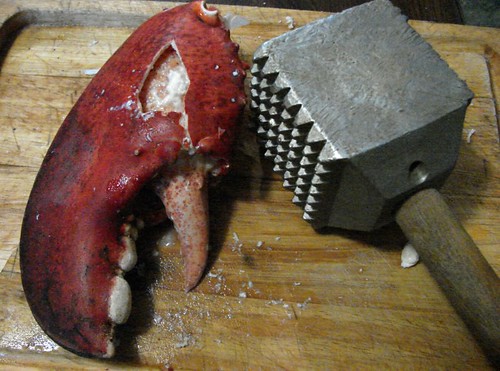
Well, not quite done.  Cooked, yes, but it still needed to be shucked.  The tail was no problem, but the claws were more difficult. This was a hardshell lobster, and the shell was a little more than 1/16-inch thick!  None of the claw crackers I have were up to the task - I ended up using my massive meat pounder, Mjöllnir, to open them up.

When all was said and done, I ended up with a little over two pounds of lobster meat and about a pound of tomalley - a very nice pile of briney deliciousness - and we had the aforementioned lobster cakes for supper.

Above, left to right:  Lobster claw, Mjöllnir.  Prolonged thumping with Mjöllnir resulted
in the small opening shown. 
.

18 October, 2009

Lobster Price Update

Back in June, I wrote about the lingering depression in the lobster market, with live-and-kicking bugs selling in southern Maine hanging at $4.99 a pound, the lowest price in years. Well, we were back in the south-of-Portland area again on Saturday the 17th, and I couldn't believe how much lower prices have gone since then.

Boston dock prices (the price paid to fishermen) are as low as $2.50 a pound, with most lobsters selling for between $2.75 and $3.00 a pound. The retail prices in Maine, from Kittery to Scarborough, was $3.49 to $3.99 a pound.

For some reason, though, restaurant prices in the area aren't reflecting this reality. At Fisherman's Catch in Wells, for example, a twin lobster dinner was being advertised at the "market price" of $21.99. Sorry, but when I can stop at any lobster pound and buy 1½-pounders for $3.99 a pound, there's something not quite right with that story. (End of season or no, I suspect that the reason more people weren't ordering lobster on Saturday had something to do with the price.)

Earlier this month, fishermen were selling lobsters on craigslist at $3.50 a pound - driven there because that direct-to-diner price was still a dollar more a pound than brokers were willing to offer them. It's a great time to buy lobster.
.

10 August, 2009

Lobster Cakes

Lobster prices are still on the low side, and here in New England they've been showing up on sale with some unusual frequency. Last week, Market Basket supermarkets on Massachusetts' North Shore were selling live lobsters for $3.99 a pound, and this weekend Shaw's supermarkets in Connecticut were featuring a 3-day special with live chicken lobsters (that is to say, 1½-pounders) for $4.88 a pound.

At any rate, they're cheap enough that instead of being an occasional treat, I'm able to use them as an ingredient in a way that hasn't been possible in years. We've been taking advantage of that recently. Last night, for example, we made lobster cakes.

If you're already familiar with my crab cake recipe, you already have the basics. But lobster and crab, despite their similarities, are very different in taste and texture, and call for a different mix of seasonings.

Lobster Cakes
Makes 6 cakes

1 egg
1 tablespoon mayonnaise
1 tablespoon lobster tomalley (if you don't have or don't like tomalley,
-- you may substitute another tablespoon of mayo for it.)
½ teaspoon prepared mustard
1 tablespoon white wine or sake
½ teaspoon ground coriander
½ teaspoon celery salt
½ teaspoon salt
¼ teaspoon (heaping) paprika
2 slices of white bread, grated to crumbs
4 cups of lobster meat (that's about what you'd get from 4
-- "chicken" lobsters - 1 ½ pounders)
Panko crumbs
Butter for frying

Whisk the egg, mayonnaise, tomalley, mustard, and sake together until smooth. Add coriander, salt, celery salt, and paprika, and whisk until smooth.

In a large bowl, toss the crumbs with the lobster meat until they are well-combined, then pour the egg mixture over all and stir until evenly moistened.

Line a cookie sheet with waxed paper or baking parchment and sprinkle it well with panko crumbs.

Form the mixture into six patties, either by hand or by using a biscuit cutter as a form. As each patty is formed, place it on the panko crumbs on the cookie sheet. Sprinkle a little more panko on the top of each patty as well. Slide the cookie sheet into the fridge and chill for about an hour or so to let the cakes "set." (This prevents them from falling apart when you fry them.)

Melt a couple of tablespoons of butter in a hot frypan or griddle and brown the lobster cakes on both sides until they are a rich golden brown and heated all the way through. Serve with a garden salad and corn on the cob.

As delicious as these are for a summer supper, I was surprised at how good they are cold the next day - good enough that I would deliberately make them ahead, chill them, and serve them as a light lunch with fresh garden tomato wedges and cucumber slices on the side.


A note about lobster tomalley:

The tomalley is the soft greenish stuff up in the lobster body; it's the lobster's liver and it has a strong and unique flavor that many people (including me) consider to be a delicacy. Too much tomalley probably isn't good for you - the US Food & Drug Administration and Health Canada both advise against eating too much of it because after all, it's liver, and the liver's function in the body is to remove toxins - and therefore, those toxins tend to become concentrated in the liver.

In this recipe, the tomalley is used as a seasoning, and the amount works out to about half a teaspoon per lobster cake (far below the FDA or HC guidelines.) It gives the lobster cakes a richer, more satisfying flavor. But if you're fretful about eating tomalley, or you just think it's too gross to put in your food, feel free to omit it and add an extra tablespoon of mayonnaise.

For more information about lobsters and tomalley, visit The Lobster Queen.


01 July, 2009

What To Do With A Big Bowl of Bug Heads

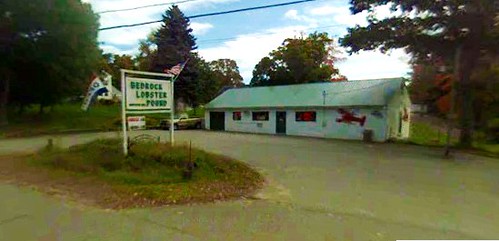
One of our regular stops when we head to Maine is the Bedrock Lobster Pound on US1 in York. It's an unassuming little buiding set back from the road, with the best lobster prices on the coast. When we're staying a few days, we'll drop in on the way back to the camper or the cabin and pick up a few bugs for supper. When we're on the way home, though, we go for something no less delicious, but a lot less elegant: Lobster bodies, aka "bugheads."

Not all of a lobster's deliciousness is found in the claws and tail, and some lobster pounds that provide restaurants and roadside clamshacks with tails and claws for lobster rolls don't just throw the bodies to the seagulls. Bedrock, for example, bags lobster bodies in lots of twelve, which this week were selling for $2.00 a bag. We bought two bags and stuck them in the cooler to keep them fresh on the ride home.

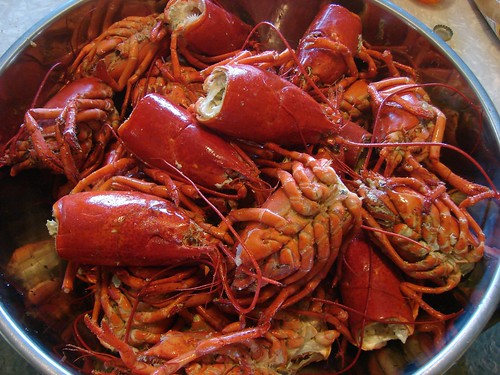
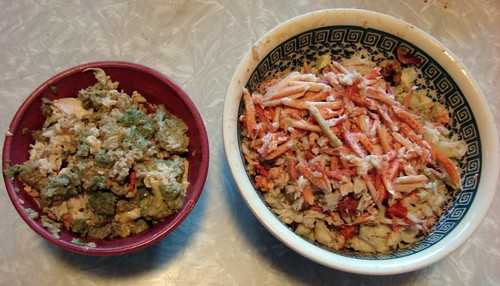
The next day, my wife Maryanne and I set to work picking our $4.00 bargain. We started by stripping off all of the little legs. The meat in the legs comes out easily if you break off each joint individually from the base to the tip. Once that was done we removed the carapace, or red shell segment, from each body. Inside the carapace, you'll find the creamy green liver, called the "tomalley." We scooped all the tomalley and all the jelly-like white fat from inside the bodies into a bowl along with any red coral (lobster roe) that we found. Tomalley is delicious all by itself spread on toast, but it can also be used to give lobster flavor to dips and spreads.

As we emptied the shells, we broke them up into little pieces and put them in a stockpot to make lobster stock.

And that left us with a pile of shelled, legless bodies. This is the tedious part: Maryanne and I spent about an hour and a half breaking the bodies open down the middle and picking out the meat in the little "pockets" along the belly. In an average pound-and-a-half sized lobster, there are two large chunks of meat where the large arms meet the body, and eight smaller chunks - one in each of the pockets where the smaller legs meet the body. When all was said and done, we ended up with about five cups of picked meat, and about two cups of tomalley/body fat/roe.

Recipes:

Tomalley Croutons / Tomalley Butter

1 teaspoon garlic, finely minced
2 tablespoons onion, chopped
4 tablespoons butter, softened
1 tablespoon chopped parsley
1/2 cup lobster tomalley
salt, pepper, and paprika to taste
1 crusty French baguette

Sauté the garlic and onion in 1 tablespoon butter. Allow to cool, then mix with the remaining butter and parsley. Use a fork to blend in the tomalley, then season to taste with salt, pepper, and paprika.

Slice the baguette 3/8 inch thick and toast on both sides. Spread each slice with the tomalley-butter mixture. Place on a sheetpan and run under the broiler just until the croutons are crispy and hot; the tomalley butter will melt deliciously into the crouton. Serve hot and cris;y.

You can make a bigger batch of tomalley butter if you have more than the tomalleys from two lobsters; just scale the rest of the ingredients accordingly.

If you decide not to make tomalley croutons, try taking a big dab of the tomalley butter and spreading it to melt over a grilled steak. As surprising as this sounds, this tastes absolutely amazing.


Lobster Salad
Makes 2 servings

1 cup picked lobster meat
3 tablespoons finely chopped sweet onions
3 tablespoons finely chopped celery
1 tablespoon sweet pickle relish
Mayonnaise sufficient to moisten
salt and pepper to taste

Combine all ingredients and mix with a fork. Serve in sandwiches, or on crackers, or in the center of a scooped-out fresh tomato.


Lobster Stock
Makes 2 quarts

Lobster shells
1 large onion, chopped
2 celery stalks, chopped
1 large carrot, chopped
2 bay leaves
8 or 10 peppercorns
a handful of parsley
Water

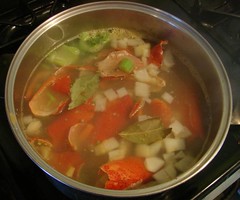
Break the lobster shells into pieces and cram as many as you can into a 10-quart stockpot. Add onions, celery, carrots, bay leaves, peppercorns, and parsley then cover with water. Bring to a boil over high heat, then turn the fire down low and simmer for several hours. Strain stock through cheesecloth and refrigerate or freeze until needed.

To make a broth rather than a stock, return the stock to the pot after straining and simmer over medium heat until the stock has been reduced by half.

Season stock or broth to taste after simmering is finished to avoid concentrating the salt.


29 June, 2009

Lobster Prices Still Low

Looks like it's going to be another hard season for lobstermen and good season for lobster eaters this summer. Although wholesale market prices for live lobsters are up from last year, they haven't rebounded significantly. Market prices in Boston range from $4.00 to $4.75 for hardshells and $3.25 to $3.75 for softshells and culls (lobsters with just one claw.) And, while the Boston Market Report indicates that supply is light and demand moderate, the pressure still hasn't forced prices higher

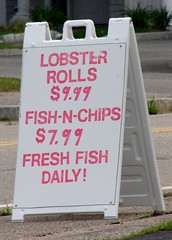
This kind of low price is mixed news for diners and tourists in Massachusetts and Maine. I was down to Maine this past weekend, and most lobster pounds were selling live bugs for $4.99 a pound from Kittery to Kennebunk (the price was slightly higher along the New Hampshire coast and the North Shore of Massachusetts, but not much.) Lobster dinners were the same price they've been in awile, though, holding at about $20 for "twin lobsters." And lobster rolls were also holding steady from last year at $8.99 to $9.99 with a few places as low as $7.99.

Fuel prices are rising again after a brief respite, and bait prices haven't eased off either. Couple that with maintenance and repair costs to boats and equipment, and a dock price of $4.00 or so a pound doesn't leave much for a lobsterman to live on. In some places, lobstermen are selling bugs directly to the public at the docks to cut out the middleman and try to squeeze a few more dollars out of a tight market.

Of course, low lobster prices won't sell more bugs if there aren't tourists to buy them. Coming up on 4th of July like we are, I expected bigger crowds along the shore than we saw last weekend. Traffic, often bumper-to-bumper and moving at a snail's pace on US1 this time of year, was thick but not unmanagable even thrugh traditional bottlenecks like Ogunquit. And there were a lot of commercial buildings and businesses closed, for lease, or for sale as we traveled up through York, Wells, Kennebunk, and Biddeford, and lots of "VACANCY" signs lit up on the motels and cabins there. Let's hope tourism picks up as we go into July.

Links and More Info:

Maine Lobster Industry Still Hurting, by Sandra Dinsmore at The Working Waterfront newsletter online

Deperate Maine Lobstermen Sell From Trucks, Homes - Associated Press hosted by Google News
.

01 September, 2008

Labor Day and Lobsters!

Today is Labor Day in the US, a Monday holiday which is traditionally thought of by Americans as the holiday marking the "end" of Summer. Tourism drops off, the kids go back to school after the long summer recess, and many of us start doing chores that prepare for the coming winter.

And here in Southern New England, it's time for lobsters, because a home-cooked lobster dinner is just as traditional a Labor Day Weekend meal here as grilling steaks. And this year, with lobster prices as low as they've been in five years or so, bugs are flying out of supermarket and fishmonger tanks and into kitchens all over the area. (Yesterday, one of my local supermarkets sold out of lobsters - 1500 pounds of them - in four hours.)

Here at Chez Dave, we enjoyed our stereotypical "lobsterbake" of bugs, steamers, potatoes, and fresh corn on the cob yesterday. Although some people think that preparing lobster at home is difficult and time-consuming, if you have a very large pot - like a common blue-enamel canning kettle - a one-pot lobster dinner is simple to prepare and won't leave you with a sink full of pots and pans.

  1. Set the kettle on the stove; it gets heavy when it's full, and this way it will be all set to go when you fill it up.
  2. Put a rack in the bottom of the pan. Something like you'd cool cookies on, and as large as you have that still fits in the kettle. Round is ideal, but whatever fits.
  3. Line the rack with seaweed if you have any. If you don't have any, just skip this step. (If you live on the shore in New England, you've probably had experience gathering seaweed along the water to put in the pot with your lobsters. If you're not close to the beach, you can sometimes get some seaweed from your lobster dealer, because lobsters are often packed with seaweed for shipping. Keeps them from getting homesick or something.)
  4. The bottom layer of food should be small potatoes. New potatoes are okay, but you might want something just a little bigger so they don't get overcooked. I've found that small round Eastern spuds about 3 to 4 inches in diameter work best.
  5. The next layer is corn. Leave the corn in the husk, just trim off the hanging cornsilk and the brown tips of the leaves, and break off any excess stalk on the ends, then place the corn on top of the potatoes.
  6. Pour in water sufficient to cover the potatoes and come up a bit on the corn. You need four or five inches of water in there.
  7. Next, arrange the lobsters on top of the corn. Your lobsters should be alive and wriggling, but if you've just got them from the store they'll be feisty as hell. Fold their tails under and try to get their claws arranged under their faces if you can, and just keep putting them in layers until you're done. A canning kettle can usually hold three or four average chicken lobsters (those are 1¼-pounders) per layer.
  8. Scrub the clams under cool running water to remove any grit, and when they're all clean, dump them on top of the lobsters.
  9. Cover the kettle and turn the heat on high. Watch it for boiling. When it starts boiling hard, start timing. As soon as the clams open (about ten minutes,) they're done and you can remove them with a wide, slotted spoon, but optionally you can leave them in until everything's ready - about twenty minutes.
  10. Arrange the lobsters in a circle on a deep platter and pile the clams in the center. Serve the corn and potatoes right out of the kettle or put them on serving dishes as well. Serve with melted butter and put a roll of paper towels on the table so everyone has plenty of rugged, absorbent napkins!

15 August, 2008

Drop in Demand Lowers Lobster Prices

With the summer lobster catch stable but demand dropping, the price of lobster has drifted downward at both the wholesale and retail levels, according to a recent news story on newsday.com.

'At ShopRite in New London and Norwich, owner Ken Capano is selling live lobsters for $5.99 a pound, an "unprecedented" sale price that has lasted six weeks, he said. "The price has come down, but more important, what I'm hearing is, the supply side to supermarket retailers is better because tourist consumption is down in Maine," he said. "So there's been more consistent supply.

"I've never seen anything like it where I'm able to promote lobsters at a reasonable price," he said.'
Although this is good news for consumers, it's making it even tougher for lobster fisherman. The wholesale price of bugs is down more than a dollar a pound, diesel prices are double what they were last year and the price of bait has tripled, putting a tighter squeeze on lobstermen than ever.

News reports are saying that the dock prices for lobster are well under $5.00 a pound in Massachusetts and staying around $5.00 a pound in Connecticut and Rhode Island. When we were in southern Maine last weekend, the retail price at lobster shacks from York to Portland was around $5.50 for standard pound-and-a-halfers.

My guess is that lobster prices are going to remain soft for a little while yet - at least through Labor Day. The CBC reports that lobstermen on Prince Edward Island and southern New Brunswick are also getting lower prices for their bugs (C$8 - C$9.50 a kilo) thanks to a combination of great harvest, higher Canadian dollar, and sluggish American economy (lots of Canadian lobsters are sold in the US market.)

.

31 May, 2008

James Hook and Company Destroyed In Fire


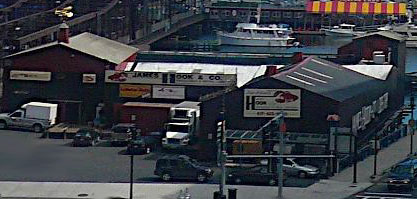
James Hook and Company, a Boston landmark since 1925 and one of New England's largest wholesale/retail seafood suppliers, was destroyed by fire yesterday in a blaze that leveled their three buildings. The seven-alarm fire caused over $5 million dollars in damages, according to a spokesman for the Boston Fire Department.

It took 135 firefighters about seven hours to bring the fire under control. their job was made more difficult because the wooden building where the fire started was filled with corrugated cardboard shipping cartons, and was built over the Fort Point Channel on timbers soaked in creosote to prevent rotting.

No one was injured in the fire, and the Hook family has said that they will rebuild and reopen as soon as possible. Meanwhile, the city of Boston and the Mayor's office are working with the family to ensure that this important piece of Boston's history, economy, and culinary scene will survive the fire.

Tragically, about 60,000 pounds of lobster - worth a little over half a million dollars - perished in the blaze.