13 August, 2011

It's NOT Free.


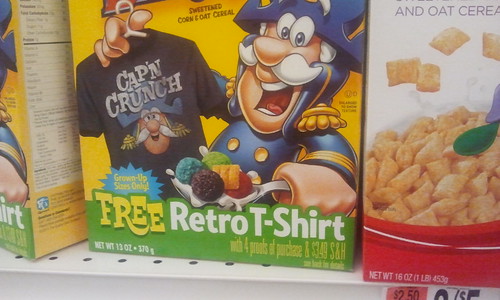
Quaker is running a promotion on selected boxes of Cap'n Crunch, offering a "FREE Retro T-Shirt."  Well, you have to send in 4 proofs of purchase and pay $3.49 for shipping and handling, but that's still "free," right?

There was a thrift store near me that used to sell T-shirts for 99 cents each. Every week, I'd scour the seemingly endless rack of black T's and pick out vintage concert and bike rally shirts which I would then sell on eBay.  I always priced shipping at $1.00, because a folded shirt would fit nicely into a Tyvek envelope which I could mail 1st Class for about $1.30 and that other 30 cents was more than taken care of by the sale price of the shirt.

But Quaker first makes you pay $16 to $20 for four boxes of cereal, and then charges an additional $3.50 for shipping "and handling."  Yeah, that's a hot freebie, that is.

You know what, Quaker?  Cap'n Crunch has been my favorite cereal since I was like 9 years old. That's a better than 40-year run (pretty damn good considering my usual attention span.) But if you think I'm going to PAY YOU to advertise your shit while you're pulling Cap'n Crunch advertisements out of the mainstream media, you're wrong.

12 August, 2011

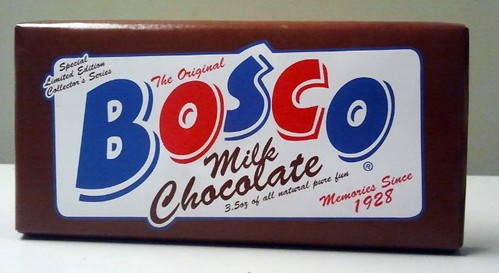
Bosco Chocolate Bar

You've probably heard of Bosco chocolate syrup. It was hugely popular in the 1950's and early 1960's and pop culture has ensured it's place as a true bit of Americana.  Bosco Syrup was often referenced on the popular TV show Laverne & Shirley, for example, and black-and-white horror movies through the late 1960's used Bosco as a stand-in for blood.

I've tried Bosco Syrup a time or two and to be honest, I really didn't think it was anything special - as good as any other chocolate syrup I've used but certainly not anything to get wildly enthusiastic about.  When I was a kid, my mother never bought Bosco at all; we always had either Hershey or Fox's U-Bet. So when I found Bosco Milk Chocolate Bars at Big Lots! I bought one out of curiosity rather than nostalgia.

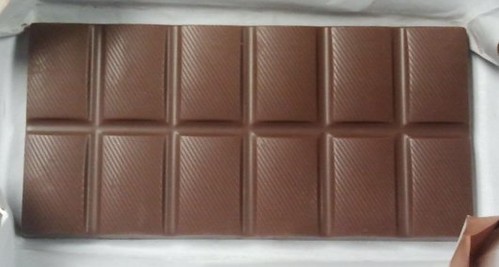
Just like the syrup, Bosco Milk Chocolate isn't really anything special.  It's plain, serviceable milk chocolate with a typical American chocolate flavor profile: sweet, mild chocolate with the faintest sour-milk or "cheesy" background flavor (next time you taste a Hershey bar, pay attention and that sour-milk flavor will be noticeable.) Props to whoever is making the Bosco Bars for using 100% real cocoa butter, making the bar silky-smooth as it melts in your mouth. There's no mockolate in this bar, and yet the best I can say about it is this: The Bosco Milk Chocolate Bar is decent but ordinary.

I suppose it will sell well to the nostalgia crowd - folks who remember the TV ads in the 1950's (not me, though, I'm not that old) or the ones whose Moms set down cookies and a glass of Bosco chocolate milk in front of them for an after-school snack. For the rest of us, well, there's nothing about it other than the name to make it stand out.


11 August, 2011

Sardines In A Pouch

Love 'em or hate 'em, there is one thing no one can deny about sardines: they are fragile little things, and don't take well to being indelicately handled. More than once, a little fishy morsel has broken off and tumbled back to the plate when I've tried to lift it whole with my fork.

You'd think that, of all the people familiar with sardines in the world, the people who actually process and package and sell them would know this. Apparently not, because Crown Prince actually has tried selling sardines in pouches.

When I saw these at Big Lots! it was almost mandatory that I buy them.  I couldn't think of a more ridiculous way to pack sardines, and I couldn't wait to find out what they were going to be like when I opened them up at lunchtime.  I could just imagine what they would look like after having been tumbled through the wholesale and retail distribution chain without the traditional exoskeleton of a metal can, and I was sure it wasn't going to be pretty.

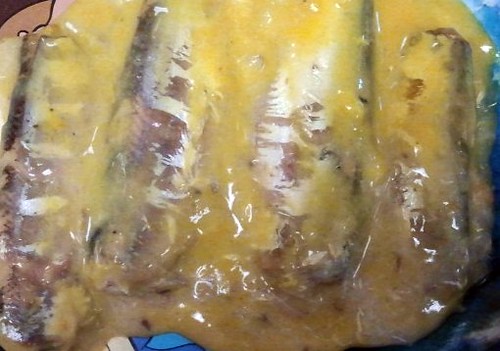
I opened the first pouch - sardines in soy oil, lightly smoked - and tipped them out onto a plate.  "Not pretty" was an understatement. These fish had the shit kicked out of them. I think there might have originally been four whole sardines in the package, but without the help of a forensic ichthyologist, there was no way to tell.  I found some fair-sized fish chunks, lots of little pieces, and plenty of tiny fragments and soft-cooked bits of rib bones.  There were also some long, semi-crunchy lengths of spine. I never remove the spines or other bones when I eat whole sardines, so I didn't bother trying to remove them when I ate these.  The fish tasted fine, although the texture was a little dry despite having been packed in oil.  And of course, there was the horrifying presentation.

The second pouch were sardines in mustard sauce.  These fish had successfully retained their shape, probably thanks to the high-viscosity mustard sauce which had the consistency of gear oil and likely provided some shock absorption during shipping. Unfortunately, Crown Prince's mustard sauce isn't the best I've ever had; it is strong and rather harsh and covers, rather than enhances, the flavor of the fish.

The final pouch, containing the sardines in "Louisiana hot sauce" (not pictured) was sort of in between the other two in terms of sardine integrity. The fish were broken but not mangled but I can't really attribute that to the presence of sauce.  As interpreted by Crown Prince, "Louisiana hot sauce" is a quantity of oil colored bright red by the clots of brownish-red pepper sauce which are suspended within it. It adds little to the flavor of the sardines, but does add a mild but irritating back-of-the-throat scratchy heat in the manner of cayenne pepper powder.

It is no surprise to me that the only place I have seen sardines-in-a-pouch offered for sale is at Big Lots. Only a job lot store could possibly sell them with a straight face, and a quick check of Crown Prince's website shows me that they don't even list this packaging option as one of their products.  Hopefully, sardine pouches were a marketing experiment that won't be repeated.

10 August, 2011

Subway's Pulled Pork Sandwich

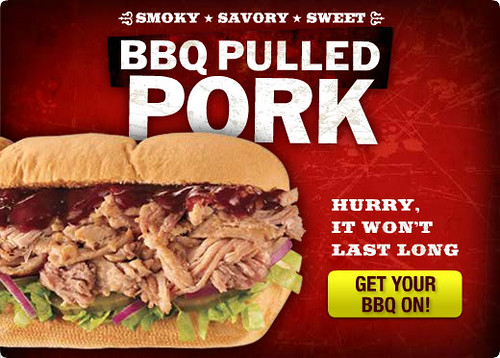
Photo by Subway
The Good, the Bad, and the Ugly: Subway BBQ Pulled Pork Edition.

The Good:
Close examination of the pulled pork reveals that it is actual slow-cooked pulled pork, fairly juicy. Even when not dressed with the barbecue sauce (I got it on the side) it had a bit of smokiness (not that I believe for a minute that Subway's little tubs of commissary-pulled pork are done in a pit.)

Subway's bread is decent. Pulled pork should be served on good soft rolls and Subway delivers.

The Bad:
That barbecue sauce is totally generic. Cloyingly sweet (thank you, high-fructose corn syrup) with bottled smoke and a limited amount of spices lending flavor. It tastes like every other cheap fast-food barbecue sauce you've ever had.  McDonalds McRib? Gotcha. Burger King "barbecue" dipping sauce? Yeah. Wendy's whatever-the-hell-completely-forgettable-BBQ-crap-they've-done? Tastes just like it.

The Ugly:
If you like a dab of pulled pork with a metric ton of lettuce and onions to make the sandwich look big, this is the lunch for you. Subway's photo ads are the biggest liars in fast food marketing. And really, every time I've been to a good BBQ joint, my pulled pork sandwich has had nothing on it but decent sauce and some sweet bread-and-butter pickles on top. Lettuce and dill pickles? WTF, Subway?

For an emergency BBQ fix, Subway's got you covered. Tell them to leave off the lettuce and dill pickles and you can almost make believe that you're at a real BBQ place, if real BBQ places used the cheapest sauce they could scrounge.

09 August, 2011

Janik Juniors, and Kiebasa With Kraut

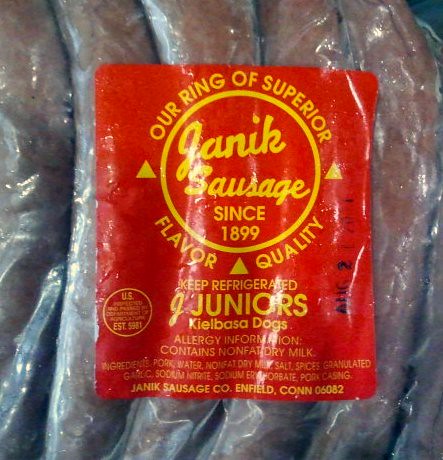
Janik Sausage Company, my hometown kiebasa makers, have introduced an awesome new product, Janik Juniors Kielbasa Dogs.  They're the same delicious kielbasa I've been eating since I was a kid, except in fat foot-long form.

The first time I saw them, it was at Arnold's Meats in East Longmeadow; I bought a package and couldn't wait to get them home to try out.  I was not disappointed. The meat and spice blends were the same as the full-sized kielbasa that is famous around here, and the natural casing gave the dogs an excellent snap. The only difference between the Juniors and their regular kielbasa (other than size) was that the Juniors have a slightly finer grind to the filling.

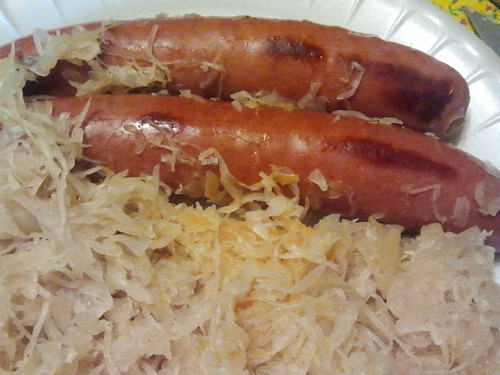
I've bought them a couple of times since that first trial, and have not yet been disappointed. They're great on the grill, and they're just as great made in a skillet with kraut.

I probably don't have to explain how to do this to anyone, but just in case you've never experienced the joys of kielbasa and kraut, here's how I do it:

Heat up a skillet.

Put in the kielbasa dogs and keep the heat on medium high.  Turn the dogs frequently as you brown them. You might want to poke a hole or two in them with a fork, so they can leak out some of the fat into the pan. If you're lucky, your kielbasa will whistle at you as steam jets out of the holes.

After browning the kielbasa dogs to your satisfaction, dump in the sauerkraut of your choice. Give it a quick couple of stirs and then turn the heat down to medium low. Let the kraut sizzle in the pan with the dogs as you stir the whole thing around a couple of times. The juice from the sauerkraut will deglaze the kielbasa bits from the skillet, and everything will taste even more excellent than you will be imagining from the aroma.

When the sauerkraut is sufficiently heated, tip the lot onto a serving platter and lift it to the table.

Done.

There is one other thing I'd like to mention about the Janik Juniors. I have yet to find a package with all of the sausages of uniform size. I think this is because they are filling them with a continuous length of casing, and there is some kind of taper to it by its nature. I would like to see the company develop a little more consistency with the sizing, but I expect that will come with practice and experience.  For the moment, though, I am really happy to see one of my favorite local food producers introducing a new product to the market.  Janik makes an excellent kielbasa, and I hope the new Juniors coax more people to give it a try.


07 August, 2011

Burger King Minis

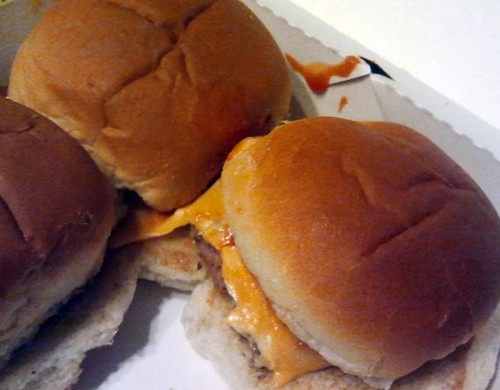
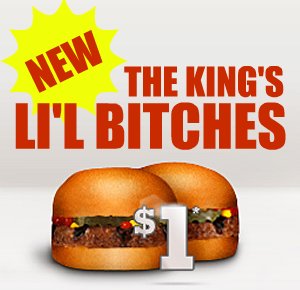
Hey, look! Burger King has little tiny burgers again! These are, essentially, the very same small pull-apart burgers that the chain has been selling on and off since the mid-1980's when they were called "Burger Bundles" and sold in sets of two for 89 cents.  They've also been sold as "Burger Buddies" in the early 1990's, and most recently as "Burger Shots" in the late aughts.

Back when I reviewed "Burger Shots" three years ago, I said I couldn't understand why BK can't seem to make a success of them. They're just miniature versions of their standard flame-broiled cheeseburger. Everything I said about them then is still true today - delicious, would be great for a few kids to share a box, and a pile of them at a party would be pretty cool. I think the biggest problem Burger King has with them is people incessantly compare them to White Castle sliders.  Minis are not sliders. They don't pretend to be. They don't taste anything like sliders; they taste like what they are: little replicas of Burger King cheeseburgers.

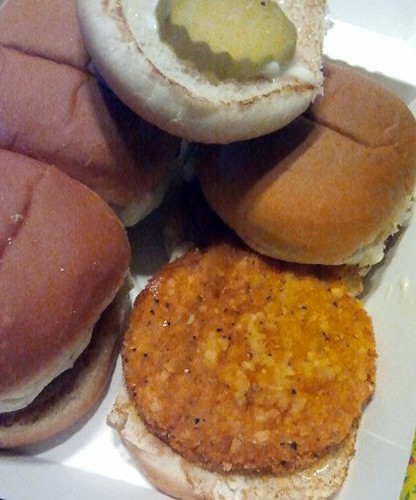
New to the lineup this time we find Chicken Minis, small breaded white-meat chicken patties dropped on the buns with mayo and pickles.  I'm not sure I like these as well as the burgers. The breading outweighs the chicken, for one thing, and even though the seasoning is decent, plopping a big-ass slice of pickle on top just overpowers it. The taste isn't bad once the pickle is gone, but they're just too bready for me.

Are Minis going to be around for awhile? Who knows - given BK's track record with miniaturization, I wouldn't bet on a longer run than about six months or so. If I were the Burger King's Prime Minister or Grand Vizier or BFF or whatever, I would tell him to just ditch the little bastards once and for all. They've never been successful enough to earn a place on the permanent menu, and eventually the marketing department is going to run out of descriptive names for small sandwiches containing 1-ounce meat patties.

Or maybe not.

05 August, 2011

Shrimp Egg Rolls

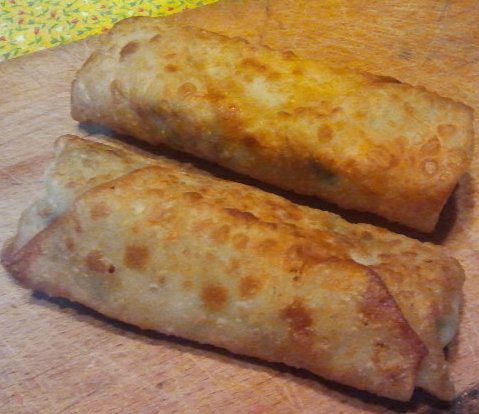
Home made eggrolls. Still akin to magic, BTW
When I was a kid, I considered egg rolls to be something akin to magic.  They were filled with shredded cabbage, but they were delicious! Not at all like the nasty cabbage my mother would make. There were other things in there, too - things I only saw inside egg rolls and had no hope of identifying.  And sometimes, there were shrimp, except much tinier than any other shrimp I'd ever seen.

Couple all that with the fact that Chinese food in general was totally mysterious (no one could ever in a million years figure out how to make it as good as the stuff you got in a Chinese restaurant!) and there you have it:  Egg rolls. So delicious and so rare, because they could only be obtained via takeout.

That was many years ago, and Asian food is not such a mystery to me any more. Good recipes on the internet, an excellent Asian supermarket nearby, and some practice have all helped me learn how to make some top-notch Chinese food.  Even the most delicious and rare delicacy of them all, the egg roll.

This recipe makes a lot of egg rolls - like thirty or more. The last time I made them, I made twenty of them right away (which were totally nommed in no time at all) and then used whatever filling was left to make another 20 which disappeared just as fast. I had originally intended to make a huge batch of them and freeze some for later, but...  damn, these things are so good you'll be eating the filling out of the pan with a fork.

Shrimp Egg Rolls
Makes about 30 rolls or so

¼ cup sesame oil
3 eggs, beaten
2 pounds of baby bok choy, finely shredded
1 cup of finely shredded cabbage
8 ounces bean sprouts
1 small carrot, finely julienned
1 can (8 ounces) shredded bamboo shoots
1 cup dried wood ear mushroom (aka black fungus) rehydrated
3 finely sliced scallions
2 tablespoons soy sauce
3 tablespoons Chinese Shaoxing cooking wine
1 teaspoon salt
1/2 teaspoon MSG
1 12-ounce package of frozen salad shrimp, thawed
Egg roll wrappers

Heat a few tablespoons of oil in a large skillet or wok. Pour in beaten eggs and cook without stirring until the eggs set firmly. Turn this "egg pancake" over and cook just long enough to firm up the other side, about half a minute. Slide the egg pancake onto a plate and allow to cool; when cool slice into thin strips and set aside.

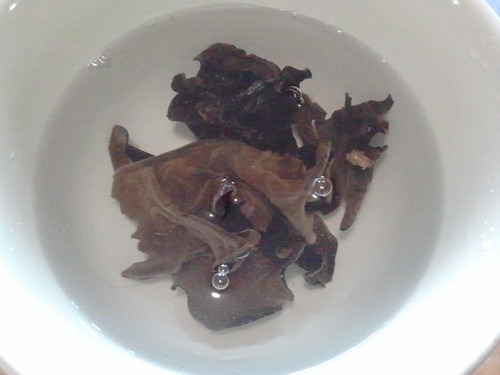
Soaking the wood ear
Rehydrate the dried wood ear mushroom by allowing it to soak in a bowl of water while you are prepping the other ingredients (shredding cabbage and cooking the eggs.) When the mushroom is soft, cut it into very fine shreds.

Heat the remaining oil in the skillet or wok and add all of the vegetables - bok choy, cabbage, bean sprouts, carrot, bamboo shoots, mushroom, and scallions. Stir fry quickly to wilt the cabbages and then, as you toss the veggies in the pan over the fire, add the soy sauce, Shaoxing wine, salt, and MSG. Continue to cook until the veggies are softened.  Add the egg and shrimp and stir over the fire for a few minutes so they pick up the flavors from the seasonings. When this stir fry is ready, transfer the mixture into a pan and put into the refrigerator to chill.

To actually make the egg rolls:

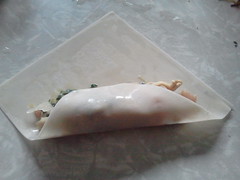
Lay an egg roll wrapper on the table in front of you with one corner pointing at you.  Dip your finger in water and wet the entire edge of the wrapper. Take a quarter-cup of the filling and spread it in a line in the center of the wrapper, leaving plenty of room at the edges for folding.

Tightly roll the bottom point of the wrapper over the filling.  Then take the side corners and fold them inward to the center, so that the egg roll kind of looks like an overstuffed envelope.  Continue to roll the wrapper up from the bottom, pressing the top corner of the wrapper to the body of the roll to seal it.

When you have a bunch of egg rolls made up and ready to cook, heat up about half an inch of oil in your skillet and fry the rolls brown on all sides by turning them frequently with a pair of tongs until you get them a nicely bubbled golden brown. Set them aside on newspapers or paper towels to drain for a minute or two, and serve hot.

A note about cooking: I like to roll these up six or so at a time, then fry the six I've made before making another six. This way, the rolls don't have time to dry out before I can fry them, and having just six on hand ready to fry means I won't overload the skillet and have too many rolls to keep an eye on. You may, if you choose, deep fry your egg rolls, or bake them (be sure to brush them with a bit of vegetable oil before they go into the oven at 400 F for 10 minutes on the first side and 8 minutes after turning them over.)

A note about wood ear mushrooms: You may omit these if you like, but if you can get some, don't leave them out - they really contribute an awesome flavor note to the finished egg rolls. You should be able to find them at any Asian market - they're one of the most common ingredients Western cooks aren't at all familiar with.

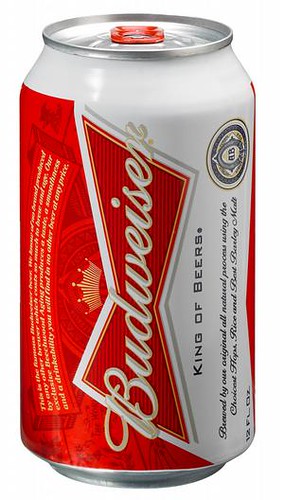
New Budweiser Can Design Unveiled


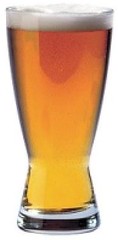
Anheuser-Busch has trotted out a new design for their flagship Budweiser beer - the 12th redesign of the can in 75 years. They've done a pretty good job of deemphasizing all that fussy verbiage on the former label, placing most of the visual emphasis on the Budweiser "bow tie."  (I don't think that's really a bow tie.  Take a look at it on end, as in the photo at left, and it looks a lot more like a traditional beer glass.)


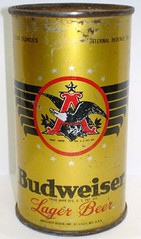
Personally, I think that the elegant lines of the original 1936 can are timelessly appealing and would have been a better choice (the company did release a limited-edition repro can a few years ago, so someone at Anheuser-Bush must agree with me.)


No matter what kind of label is on the can, though, it's what's inside that counts, and  this tweet pretty much sums up the real problem with Bud:


04 August, 2011

Cheap Parmesan


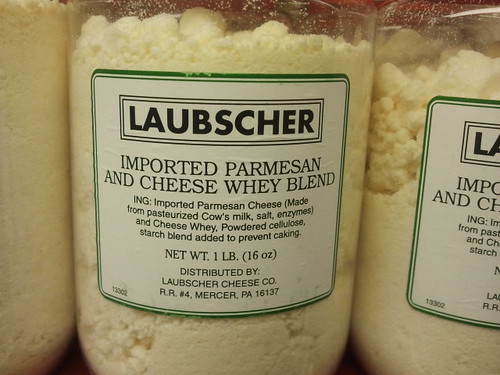
Since they're mixing it with "cheese whey" I suspect that the Imported Parmesan Laubscher is selling might not be imported from Italy.

02 August, 2011

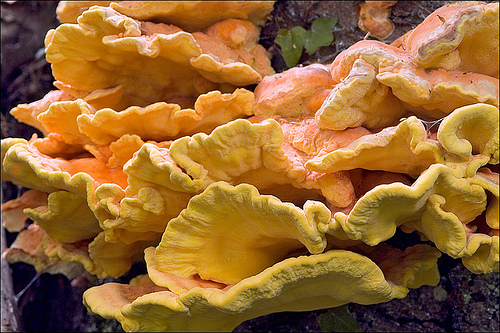
Chicken Mushrooms

Photo by amadej2008 Used under
a Creative Commons license. Original photo is here.
So I stopped over at my aunt's place the other day, and she was all excited about having me try a casserole she had made.  She insisted that I taste it before she'd tell me what was in it, and because I'm a good sport and I figure she's not going to try to poison me after having been my aunt for half a century, I did. It was pretty good - along with the elbow macaroni, I identiefied gorgonzola cheese, a touch of olive oil, and some strips of reddish meatlike stuff that tasted kind of chickeny.

I complimented her on the dish; it was well-seasoned and the flavors worked well together, and she hadn't tried to bury the whole thing in loads of cheese. That's when she told me that the meat-like stuff was chicken mushroom that she'd foraged from a neighbor's yard.  New one on me; I gather a few different kinds of mushrooms (including the golden shrooms that come up every year in my backyard) but somehow this easily-identifyable and delicious mushroom had completely slipped my notice.

I did some reading up on them, and it turns out that chicken mushrooms are fairly common and a good mushroom for beginning mycologists to gather, since there are no poisonous mushrooms that look enough like them to be confused. They have an affinity for oak trees.  This article from Eat Drink Better gives much more detail about the two chicken mushroom species, where you can find them, and how to gather them.