Showing posts with label seafood. Show all posts

25 September, 2014

The Big E 2014 - Matunuck Oyster Bar


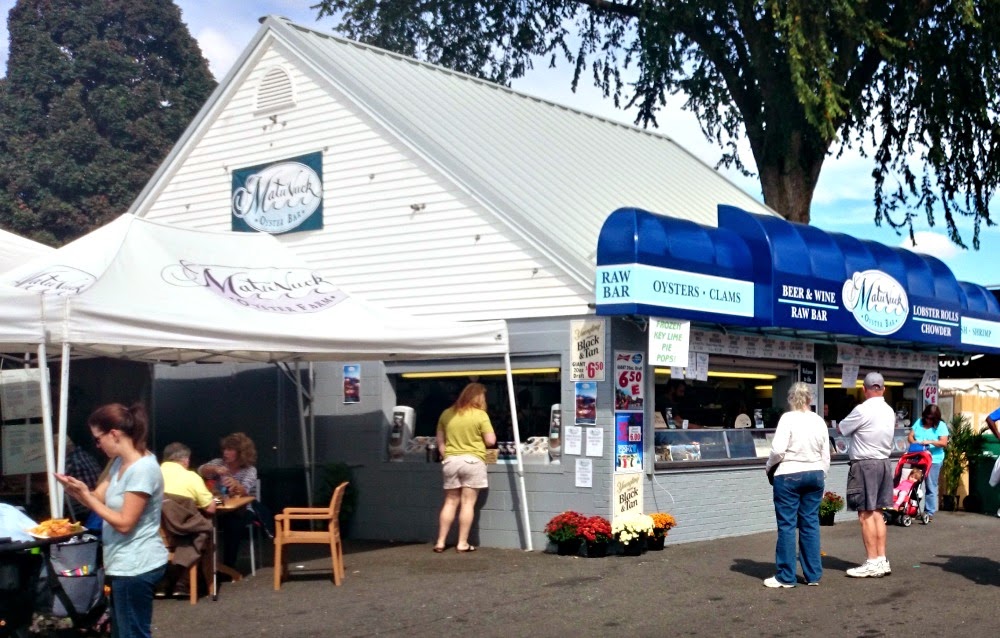
In Rhode Island, the Matunuck Oyster Bar is justifiably renowned as one of the state's - indeed, even the country's - best oyster bars. And so it was great excitement that it was announced that they'd be opening up a raw bar at the Big E. While anything new is welcomed at the Exposition (existing businesses tend to become entrenched and the waiting list for new vendors to come in can often be years long) having Matunuck arrive at the fair was treated as an especially big deal, particularly by the local news media who went bonkers over the idea of a raw bar at the Eastern States Exposition! 

[To tell the truth, I was pretty excited by this news too - this is a New England state fair, after all, and we need more New England-oriented attractions and fewer stupid copycat crap attractions like the faux "Mardi Gras" parade.  Mardis Gras? Really? In fucking September??]
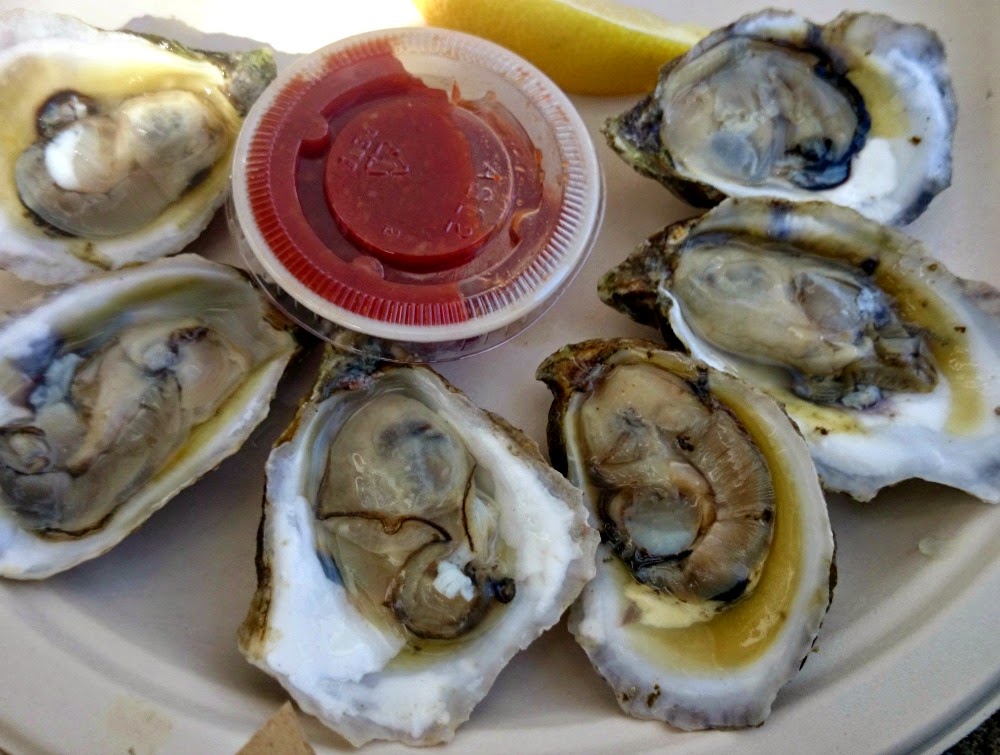
So anyway, I wandered by the oyster bar to see what all the fuss was about. The shellfish was nicely iced and looked pretty decent, and they were taking the time to shuck oysters as they were ordered to make sure everyone got the best experience possible. So I ordered half a dozen oysters for a light early lunch.

They were...okay.  Just okay. Nothing stellar, and I'm really glad I decided to order when I did, because when the fair gets crowded, there is a long queue at the ordering counter here and these oysters were, quite frankly, not worth an extended wait time. They were good enough for oysters trucked inland far from the sea, but also they were small, not very plump, and not very sweet or briny. Go to one of Matunuck's Rhode Island restaurants and you will have an awesome experience. Go to their Big E building and you will have supermarket oysters.

The condiments available for the oysters are low-grade standard as well - a slice of lemon and a cup of very bland and ketchupy cocktail sauce on the plate, and a bottle of unexceptional hot sauce at the pickup window for optional sprinkles. Horseradish was missing and very sadly missed - I would have take a big scoop of it just to mix with the cocktail sauce to try and kick up its Heinz 57ness.
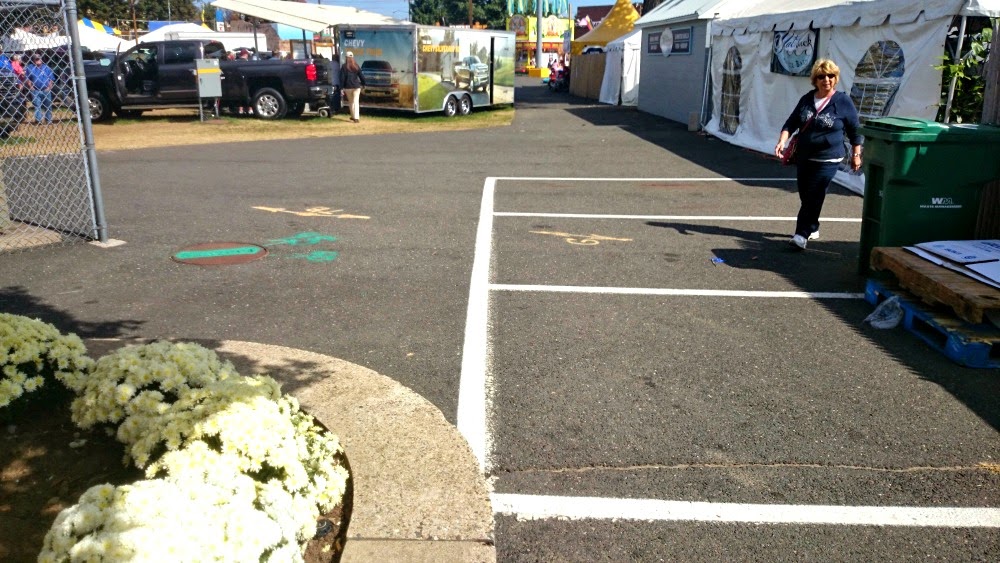
Matunuck's auxiliary seating bench (a concrete flower bed.)
I'm also going to take this opportunity to bitch about the seating. Many of the food vendors (and restaurant operators) at the Big E take a crowd-oriented view of seating: they set out picnic tables in their areas and benches at the perimeters, and as folks order they find seats with strangers along with friends, kind of "boarding house" style. Sharing a space like this is common and traditional and it gets people, if not talking to each other, at least introducing themselves and exchanging a little small talk. Not at Manutuck Oyster Bar, though. They set out tiny little tables which can just about fit four people. Except a great number of couples claim tables in such a way that it makes it difficult or impossible for anyone else to sit and share a space, effectively cutting their seating capacity in half. The result of this misguided attempt at "intimate bistro seating" is that those unlucky enough not to find a seat are forced to wander out to the back alley and sit on the concrete edge of the flower bed ringing the New England Center building. There's a great view of the electrical transformer and the service area/trash barrels for the various food vendors. At least it was convenient to be able to just walk a step or two to throw away the shells.

05 August, 2012

Low Priced Lobsters...Maybe.

You may have been hearing about record low lobster prices - reportedly as low at $1.25 a pound in some unnamed places - and figured it might be a good time for buying some bugs. But you need to be aware that these low prices are the ones being paid by wholesalers to the fishermen, and the savings aren't always being passed along the chain of middlemen to retail buyers like you, visiting the lobster pound or shopping at the fish market.

My wife Maryanne and I recently took a drive up the southern Maine coast from Kittery to a little north of Portland. The news had been reporting lobsters at record low prices, and we thought we'd combine a pleasant day trip with some bug buying (cryovac'd or packed tightly in freezer containers, cooked lobster meat freezes well, and if prices were really as low as the chatter indicated, I figured we'd buy a dozen or so lobsters to cook, pick, and freeze.)

Prices for lobsters vary widely, and if you're a New Englander hoping to get some really cheap bugs at the shore, you may be just as well off buying lobsters on sale at your local supermarket. In my area, over an hour inland, lobsters are running on sale at $4.99 a pound - and despite everything you might have heard on the news, that's about what you're going to pay at the lobster pounds in Maine.

There are three terms you need to be familiar with when you're buying lobster at a pound:

Culls - These are lobsters that have lost one of their large claws.

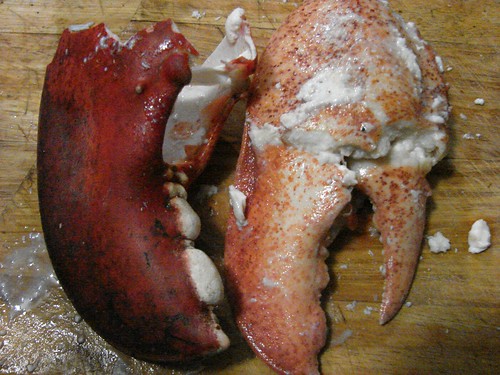
Soft-shells - Lobsters moult annually, losing their hardened shells and growing a new one. The new shell is thin and soft enough to be torn away with your fingers - no crackers needed! - but it is also much larger than the meat inside, because the lobster needs enough room inside the new shell to grow for the coming year. Just remember that when you buy a soft-shell lobster, there's not as much meat inside as it looks.  Check out the picture at left: I took a photo of a soft-shelled lobster claw against a bright light. The dark area in the shell is the shadow of the meat the shell actually contains.

Hard-shells - Lobsters contain the most meat when their shells are thick and hard - they have grown into the shell they created when they last moulted. Lots of meat, but it's more difficult to get out because the shell is thick and hard and needs to be cracked open with a cracker or even a crab mallet.  Here's a picture of the meat from a hardshell claw.  See how much larger it is, and how it fills the shell? But you can also see that the shell was about ¼-inch thick - I needed a hammer to get into it!


Okay, lesson over - back to the story about lobster prices. We found that the lowest prices - anywhere from $2.99 to about $4 a pound - were for small, soft-shelled culls weighing about a pound, and for small whole lobsters up to about 1¼ pounds.

Pound-and-a-half lobsters - the size you most often find in restaurant lobster dinners - were ranging from $3.75 to about $5 a pound for softshells.
As the sizes got larger, the prices increased steeply. One lobster pound in Portland, ME started their prices at $7.95 a pound for small softshells.
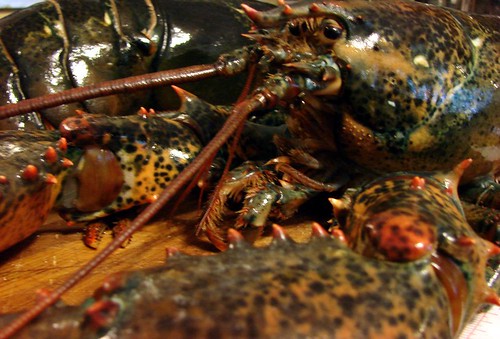
No matter where we were, hard-shell lobsters were about a dollar a pound more expensive.

Our biggest surprise, though, was the price of lobster dinners in restaurants, which averaged about $16.95 with a couple of places charging upwards of $24. Clearly, diners are not seeing the benefits of the lower lobster prices on the dock.

If you're heading for the coast in search of a New England Shore Dinner, welcome! You will find some good deals if you take some time and look around.


20 December, 2011

Lobster Slider Patties

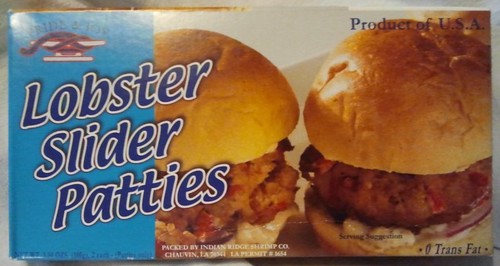
I was poking around in the frozen food section of Dollar Tree and found these: Lobster Slider Patties. How awesome to find something as expensively gourmet as lobster at such a reasonable price! Even though the box felt kind of light, still: LOBSTAH FOR A DOLLAH! I knew it must be true, because "Lobster Meat" was the first ingredient listed on the side panel Yea, though I paid a pauper's coin for this delight, verily I would dine like King Neptune this night.

Of course, there was other fine print on the label, like on the front where it shows a photo of two plump and delicious lobster slider patties on fresh rolls with some kind of mayo peeking out from the bottom.  Superimposed over the bottom of the righthand sandwich, in a typeface so tiny it is barely readable by the naked eye, is the advisory: "Serving Suggestion." This is a marketing term which loosely translates as "What you're seeing here isn't exactly what you're getting in the box."

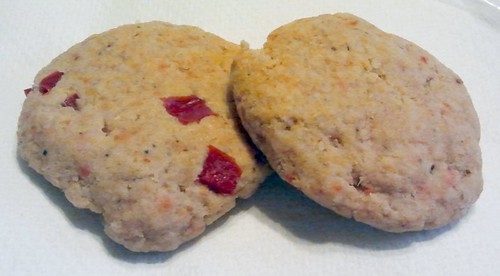
When the box was opened, we found two "patties," sans bun (that was part of the "Suggestion," and the box was after all clearly labeled "Slider Patties" without any mention of buns.) They were about the size and shape of a chocolate-chip cookie, and looked like they had been hand-formed.

The cooking instructions strongly suggested baking the patties in the oven, mentioning that it was superior to the micowave. Instead, I opted to pan-fry them in butter. Besides the fact that pan-frying adds a delicious crispy crust to the bottom and top, I was also not about to run the oven for two tiny little dollar-store patties. So into the pan they went, sizzle-sizzle-sizzle, and out they came to a plate a few minutes later, exactly as anticipated: crispy and browned on the top and bottom, soft and hot inside.

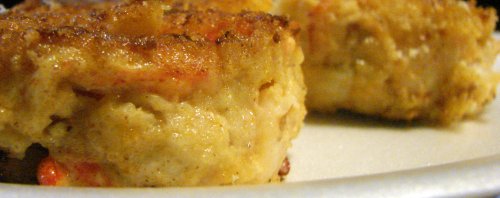
We broke bits off and examined them. They are definitely made primarily of lobster meat and crumbs, exactly as the ingredient label states. (The red pieces you see in the photos are bits of red bell pepper that appear to be added as a garnish.) But don't look for chunks of lobster, because you won't find it. Look carefully at the lobster patty chunk on the end of your fork, and you'll see the meat: tiny little fibers that are the last remaining bits of salvageable meat from the lobster after all of the choice bits have been taken for other purposes. Note, however, that there was no way for us to really tell what kind of "lobster" it was. It could have been Maine lobster, or langostino "lobster", or lobster tails for all we could tell.

At any rate, it didn't matter. The patties passed the most important test: they actually tasted good. They had a decent shellfishy flavor and a smooth, if a bit wet, texture that was reminiscent of the stuffed clam filling one might find in a restaurant. A few dashes of hot sauce pepped up the patties and brightened the shellfish flavors.

I don't really think I'd serve these as "sliders," on a little hamburger roll. That would be way too much like eating a bread sandwich (I'll have a whole wheat on rye, hold the pumpernickel please.) But if I had some little sausage patties on biscuits, these lobster patties would be awesome snuggled in there against the pigmeat.

So I might not have dined like King Neptune, but I liked the lobster patties well enough. A buck well spent.

30 July, 2011

LOBSTER!

My 4½ pound bug
Shop-Rite had lobsters on sale this week - $6.99 a pound with your Shop-Rite card, $5.99 a pound with your card and a coupon from the flyer.  The smaller lobsters were all softshells, which meant that they had recently moulted and would have less meat within - the tradeoff being that the meat often has a sweeter and more delicate flavor.

I selected a 4½-pounder from the tank and found out that the coupon wasn't good on the really big bugs - only on the smaller ones - but when all is said and done, $6.99 a pound is still decent for a 4-plus pounder.  I don't often buy small lobsters to cook at home any more - none of us really care if we get individual lobsters, and I wind up making lobster rolls, lobster cakes, or just warming up the meat in a pan of hot melted butter and serving "lazy lobster."

The amount of meat inside a lobster varies. Softshells have the least amount of meat in relation to the size of the shell because they have recently moulted and the new shell has to give the creature enough room to grow inside.  Hardshell lobsters have the most amount of meat in relation to the size of the shell because the bug has already grown to fill the shell and will be moulting again soon. Larger lobsters have a somewhat better ratio of meat to shell and it's a lot less work to shell one big one than it is to shell a bunch of smaller ones. So, if you're buying lobster to serve other than "in the rough," or for a recipe that will serve several people, you're better off buying a big lobster and cutting it into chunks than you are buying several small ones.

There is a myth that large lobsters are "tougher" than small ones.  This isn't really true; if they're cooked correctly, a big lobster can be tender and delectable.  I think people have a tendency to overcook large lobsters because they think that a great big lobster has to be cooked a lot longer than a small one.  I always steam my lobsters (it's more efficient and, in my opinion, gives the cooked product a better flavor) and I do it this way:

  1. I use a large roasting pan with a rack in the bottom and a lid.  I put a couple inches of water in the bottom of the roaster and put it over high heat on the stovetop.
  2. When the water is at a full rolling boil, I put in the lobster(s), on their back, onto the rack and cover the roaster tightly with its lid
  3. Lobsters should steam for 13 minutes for the first pound, plus 3 minutes per pound for every pound thereafter.  So, my 4½-pound bug steamed for 23 minutes and it came out awesome. (13 minutes for the first pound + 9 minutes for the next three pounds + 1½ minutes for the last half pound = 23½, rounded down to 23 minutes for the hell of it. Who's kitchen timer measures in half-minute intervals anyway?)
  4. Take the bugs out of the steamer, set them in a bowl, and allow them to cool for a few minutes before serving or shucking.
I got about a pound and a half of lobster meat from the 4-and-a-halfer, plus half a cup or so of tomalley and some white lobster fat (I chill the tomalley and fat, then blend them together and use them for a spread on toast for breakfast - or you can use tomalley to flavor melted butter for popcorn.)  I used the meat to make foot-long lobster rolls.
This is a "hot" lobster roll, made with lobster meat and melted butter.  A "cold"
lobster roll is made with lobster meat and mayonnaise. Usually, I make the mayo
version, but I didn't have enough mayo in the house for a bunch of footlongs, so
this time I made the butter version instead.
Incidentally, there seems to be quite a controversy about lobster rolls.  No matter where you go in New England, a lobster roll is usually a top-sliced hot dog role piled high with dressed lobster meat. The disagreement centers around what the meat is dressed with. In Connecticut, it is most common to find "hot" lobster rolls, dressed with melted butter.  In most other maritime New England states, "cold" lobster rolls are found, dressed with mayonnaise.  Butter purists claim that adding mayo makes it "lobster salad" not a "lobster roll;" meanwhile mayo fans know that mayo rolls are everywhere in Maine (aka Lobster HQ) and if mayo is delicious enough for Maine it's delicious enough for them too.
Personally, I enjoy lobster rolls both cold and hot. But when I make them at home, I usually make cold lobster rolls, dressed with mayo, because that's what I usually had when I was growing up in Massachusetts.  I'd be interested to learn which way you prefer your lobster rolls - let me know in the comments.

27 July, 2011

Tiny Shrimp, Revisited

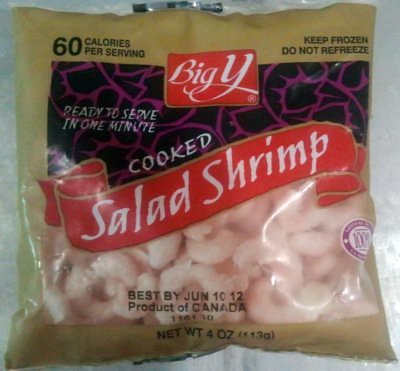
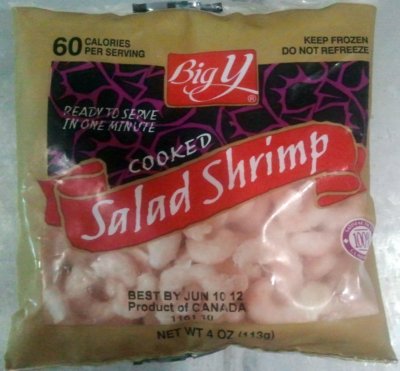
Not too long ago, I mentioned Sau-Sea Shrimp Cocktails and making my own with "salad shrimp" I occasionally bought at local supermarket Big Y. The salad shrimp there is always, without exception, nasty. Overly salty, wet and spongy and with the texture of wool felt, Big Y's salad shrimp barely taste like anything but salt. They are disgusting little grubs, and after my last experience with them I was ready to write off salad shrimp forever.

And then it was ALDI to the rescue.

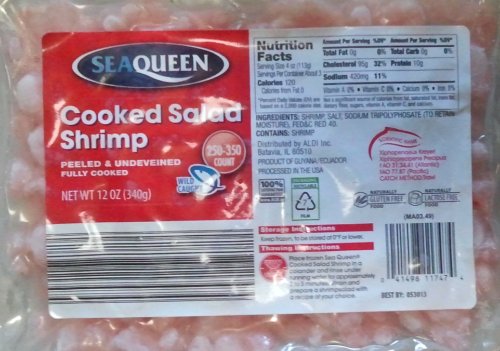
ALDI's Sea Queen brand Cooked Salad Shrimp are just about as awesome as salad shrimp can be given their size.  They're plump and tender and they taste like shrimp, not saltwater. I made a couple of fake Sau-Sea-style shrimp cocktails with the Sea Queen shrimp and they were pretty good, about the same level of pretty goodness as I remember the originals.

The difference between the two products is stunning; after trying the Sea Queen brand, it amazes me that any store would put their name and logo on something as bad as the Big Y shrimp.

But aside from flavor, texture, and general edibility, there are other differences between the two products.  Sea Queen salad shrimp come in a 12-ounce package for $3.99.  In order to get 12 ounces for that price from Big Y, you have to wait until they're holding one of their "Buy One Get Two Free" sales, during which they mark the 4-ounce package up to give you two more of them "free." The Sea Queen brand specifies that the shrimp are wild caught, tells you which waters they are caught in (in this case, Guyana and Ecuador) and where they were processed (USA.) They also note the species of shrimp and the catch method on the package. This kind of labeling is unusually transparent, and it's one of the reasons why I'm not hesitant to buy frozen seafood at ALDI: I always know where it's coming from.  Would that some other big supermarket chains do the same thing - you get nothing but a terse country of origin line on the Big Y brand.

So, if you're still game to try making your own little shrimp cocktails at home, stop by ALDI and pick up a bag of their salad shrimp while they're still featuring it. You won't be sorry.

17 July, 2011

Sau-Sea Shrimp Cocktails & Tiny shrimp

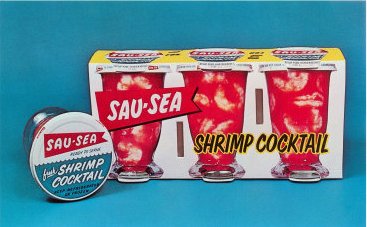
Do you remember Sau-Sea shrimp cocktail?  When I was a kid, this was one of my favorite treats;  my mother would buy them for semi-special occasions.

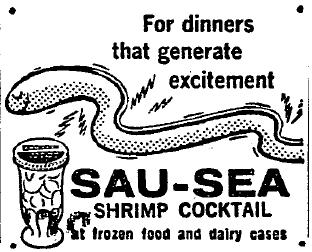
Sau-Sea cocktails consisted of tiny little shrimp, swimming in a bland, almost ketchupy, cocktail sauce and packed in small fluted juice glass. Each glass was sealed with a litho'd tin lid, as shown in the photo, and the glasses were reusable.  Go to a church rummage sale and you'll find a testament to Sau-Sea's onetime popularity - you'll almost always find a dozen or more of those heavy little glasses for sale (often for about a dime each.)  Up until the mid-eighties, when she finally sold off her own hoard in a tag sale, I bet you could tell how many times our family had eaten Sau-Sea shrimp cocktails by the number of old Sau-Sea tumblers lurking in my mother's kitchen.


When Sau-Sea first started business in the late 1940's, shrimp was a luxury food that most people almost never ate outside of a restaurant.  These days, of course, you can get really good fresh or freshly-frozen shrimp at just about any supermarket, and they're big enough to actually see with the naked eye.  Even so, sometimes I get nostalgic for Sau-Sea Shrimp Cocktail. It doesn't seem to be as ubiquitous as it once was, so I often try to make my own version.

Big Y sells small bags of what they call "salad shrimp." Like most of what Big Y sells, they're hideously overpriced - except for a few times a year when the store jacks the price up a bit and then pretends to do everyone a favor by selling it as a "Buy One, Get Two Free!" special. That's when I'll buy three bags and make my own bastardized Sau-Sea imitations.

Thanks for selling me that
bag of krill, Big Y.
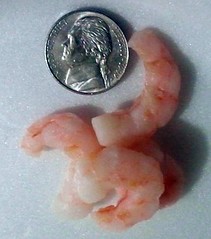
I make up some cocktail sauce - not the boring Sau-Sea cocktail sauce of my sprogdom, but my own kickass version - and pack the salad shrimp into juice glasses. It's never the same.  Those salad shrimp are completely nasty. They're not tender and meaty like shrimp should be, they're soggy and wet and feel like shrimp-shaped cut-outs from a kitchen sponge when you chew them. And even though they're about as tiny as they can be and not qualify as Sea Monkeys, size doesn't really have anything to do with their crappiness - that's purely the fault of whatever cutrate company Big Y deals with.  And, of course, it's my own damn fault for buying them again. You'd think I'd have learned my lesson by now, but  no - there I am,  back at the frozen food counter, buying shitty little fingernail-clipping-sized shrimp from Pig Y. Whatever else you may think of Sau-Sea, back in the day the shrimp might have been small as hell, but they were always pretty decent and they have my respect in that regard.  Also, those glasses. Until I was like 14 years old and started chugging it right from the carton, I never had orange juice at home unless it was served in one of those repurposed Sau-Sea glasses.


I hardly ever find Sau-Sea shrimp cocktails in the store anymore.  When I do, I rarely buy them. They're more expensive than when I was a kid, when the Waldbaum's Food Mart in town sold them for something like $1.25 for three little jars, and those little tiny shrimp just don't seem to be such a good deal as they used to.  My perceptions of "shrimp cocktail" have changed since I was 7, I guess.  And the Sau-Sea company has changed, too.  In 1993 they  decided to become a marketing company rather than a manufacturer.  They stopped processing their own shrimp in Yonkers NY, released the 70 employees who had processed 10 tons of shrimp per day, and handed over production to a company in Virginia.

Sau-Sea newspaper advertisement, c. 1960

18 April, 2011

Out Of The Can: Snow's Clam Chowder

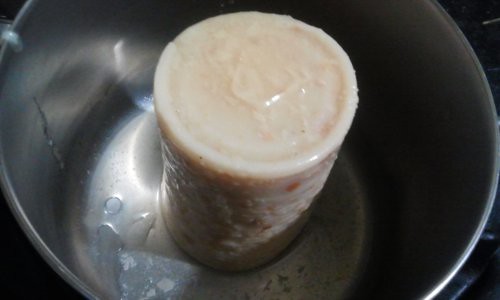
The cylinder of condensed soup slid out of the can and into the pot with a wet sucking sound. Most of the jiggling bar of soup was made up of a kind of clammy gel, but a pool of clear, sticky fluid also ran to the bottom of the saucepan.  I added a can's measure of milk and stirred the chowder over a low flame, and rediscovered why I really hate Snow's clam chowder and hardly ever buy it.  

It's that clammy gel.  The stuff never really blends with the milk.  You stir it in, and it separates into chunks of gel; the chunks would be perfectly happy to remain just like that - big globby things that float around in the milk with their sick slimy mouthfeel and low tide taste profile. Eww. I always wind up taking the whisk to Snow's chowder and even then all that does is break up the gel into smaller and smaller gel bits - it never blends.


It wasn't always like this, you know.  I remember when Snow's was made here in New England and it was still good. There was always a can or two in the pantry at my Mom's house. Snow's Chowder was the standard against which all condensed canned clam chowders were measured from the time the company was founded in 1920. But by the 1990's,  (right about the time their corporate overlord Borden was being taken over by private equity firm KKR) I noticed that the quality and flavor of the product had changed.  Snow's Clam Chowder stopped being a pantry staple for me as the quality really started to slide.  

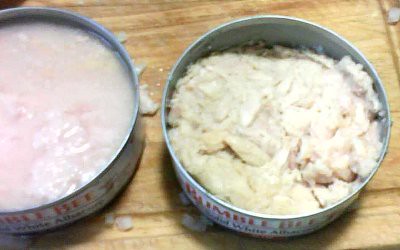
Nasty crap tuna.
Still, I buy a can now and again hoping that maybe the Snow's I knew as a kid will be eased back into production.  Unfortunately, the Snow's brand is owned by Bumble Bee now, so I  sincerely believe it's never ever going to return to its former deliciousness.  Bumble Bee are the  makers of the worst canned tuna on the market and it's the company that shut down the last remaining US sardine cannery after promising not to do so less than a year earlier.

10 February, 2011

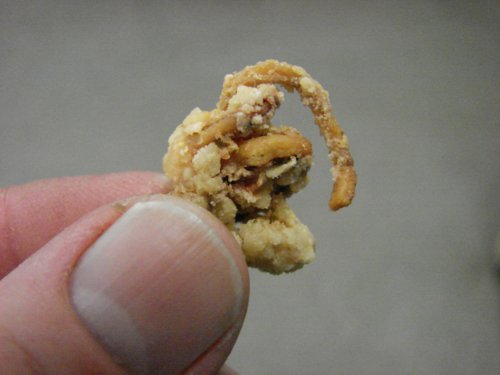
Fishy Delights 41: Ready-To-Eat Crispy Squid Heads

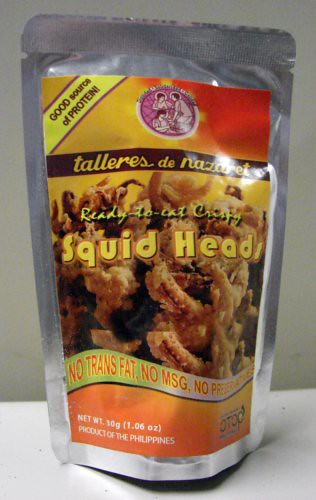
Ready-to-Eat Crispy Squid Heads.  I can't even begin to tell you how delighted I was to find this snack on my latest excursion to A. Dong Supermarket in West Hartford.  I just looked at the photo on the package and was overwhelmed with the urge to buy it.

I got home and ripped open the package.  A strong but clean aroma of fried clams slapped me in the face, and I peered inside the bag to find it filled with lightly breaded squid tentacle bunches, fried until crispy, fairly beckoning me to reach in and GRAB THEM AND NOM.

I managed to control myself long enough to take some pictures.  

You can see how deliciously delicate the tentacles are.  They're covered, as I said, in a light crunchy breading.  And they are scrumptious, though not in the way that I expected them to be.

Because when I smelled their calamarish perfume and saw that they were indeed actual squid tentacles, I expected an assertive squid flavor, which is not actually what I got.  No, the flavor is subtle and almost ethereal rather than bold and clammy. These tasty morsels are close cousins to those tins of French-fried onions that people dump out onto green beans at Thanksgiving time, only with a hint of seafood flavor replacing the onion taste.

Despite the gentleness of the squid taste, I found myself really enjoying them.  They were crunchy and satisfying and there was just enough in the package to make a perfect snack.  I am really glad that I bought two of them while I was there, so I can treat myself to them again without having to make the road trip out to West Hartford for them.

30 November, 2010

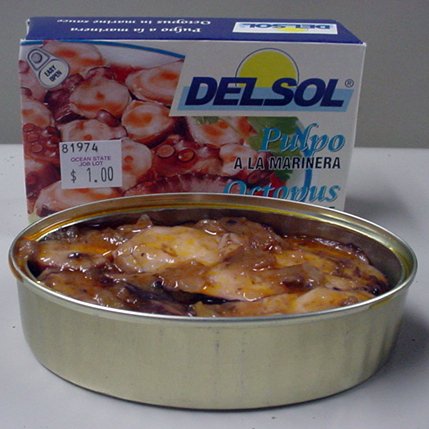
Fishy Delights 40: Del Sol Octopus In "Marine" Sauce

You know what seafood I find just about irresistible?  Canned octopus.  There are good brands and mediocre brands, but I've never had a bad one.

Take this very inexpensive brand, Del Sol, which is produced in Spain. It's amusingly labeled in both Spanish and English:  Pulpo a la Marinera / Octopus in Marine Sauce.  Heh.

Anyway, the moist cooking-in-the-can process that pasteurizes and seals the can isobviously an excellent way to prepare octopus, because just like every other tinned octopodes I've tried, the meat is tender yet firm, somewhat al dente, and just a bit resistant to chewing (but not at all rubbery.)  The sauce was nothing special - very oily, not much of a tomato flavor (not much of any flavor, actually) but still carrying a subtle hint of spiciness that complimented the meat.  Most remarkable of all to me was how very much this octopus reminded me of lobster.  No kidding, it had about the same level of chewiness as chunks of lobster tail, and the flavor was similar as well, though not exact.  I bet if I had rinsed some of the sauce off, pounded the chunks of meat to "loosen" them up a little, and dressed the bits in mayo, they'd have made a decent Mock Lobster Roll.

Normally, tinned octopus is cut into slices before being packed.  I think that someone on the packing line dropped their knife as this can rolled by their work station.  Pretty awesome, no?

23 September, 2010

Seafood at the Asian Buffet


I'm not really a big fan of all-you-can-eat Asian buffets.  For one thing, the food is usually pretty ordinary and for another, I don't really like to gorge myself when I eat...not even when it's "all you can eat."  It never fails to amaze me how the human land yachts at AYCE buffets insist on getting enormously-piled plates for each trip up to the steam tables.  I mean, what the hell?  You can take as many trips up to the trough as you want - is it really necessary to take eight pounds of crab legs at a time?  Oink-feckin'-oink, dude.

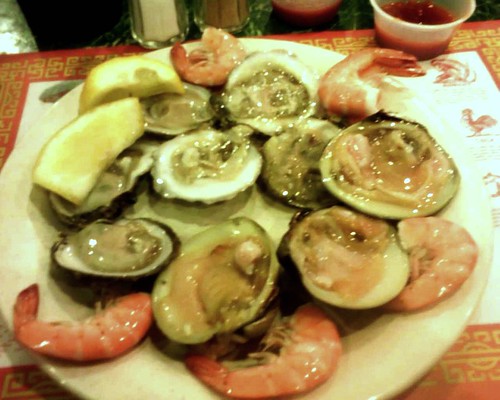
But enough of that tangent.  What I really want to write about is how awesome the seafood is at the buffets around here.  When I get a jones for oysters or clams on the half shell and don't want to spend a bundle to satisfy it, I go to one of the nearby Asian buffets.  They all have very-good-or-better cherrystones and oysters (sometimes on the small side, but that's okay with me.  When I eat an oyster, I don't want to feel like I'm swallowing a baby.)  And peel-and-eat shrimp.  And fried shrimp, and a couple of kinds of fish, and various squid dishes and preparations, and on and on.  I'm perfectly happy to leave the average-quality lo mein, fried rice, and various incarnations of teriyaki alone and concentrate on the briny goodies.

Except for the aforementioned crab legs.  I don't know what it is about snow crab legs that is such a magnet for gluttons but hey, if a pan of crab legs will draw 'em off the rest of the buffet then cool.
.

22 September, 2010

Everything Likes To Eat Lobster. Even Lobsters.


Lynnafred took this pic of a lobster in the tank at Waldbaum's in West Hartford.  He was right in the middle of chowing down on his cellmate, whose partially-eaten corpse may be seen, belly-up, in the lower left corner of the picture.  Notice that the lobby has enough strength in his left "crusher" claw to open up a little despite the rubber band supposedly holding it shut.  That's just enough to be able to get a grip on an opponent who's too weak to resist.

You may not know it, but that is the real reason why lobsters are marketed with their claws held shut by rubber bands.  Fishermen already know how to handle lobsters without getting pinched.  Wholesalers and retailers really don't care all that much if some mook poking the bugs gets a claw-induced blood blister.  No, they clamp the claws because in the stress of the overcrowded holding tanks, the unfed and agitated lobsters turn on one another and would tear each other apart before they can be sold.
.

18 August, 2010

Sardine Cannery To Reopen Processing Lobster

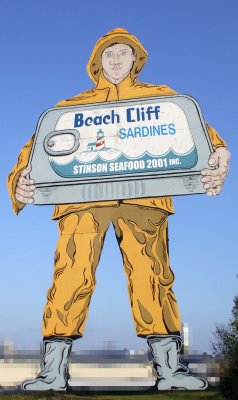
Back in February, I wrote about the closing of the last remaining sardine cannery in the US.  Bumble Bee Foods, citing a reduction in US herring catch limits, shut the former Stinson Cannery in April.  It was a big blow to the town of Prospect Harbor, where unemployment is high.  It was big news at the time - sardine canneries were once a huge part of the New England economy, especially in Maine - and the story was widely reported at the time.

The former Stinson cannery is in the news again, although this time it's not attracting nearly as much attention (probably because it's good news this time.)  Live Lobster Company of Chelsea MA has agreed to purchase the plant with an eye toward expanding its operations into processed lobster.

For now,  the company wants to use the plant as a purchasing station for locally-caught bugs, and they want to begin operations as soon as possible with lobster buying and bait sales.  The company's primary business is live lobster wholesaling to customers in Europe, Asia, and the United States, but the availability of the cannery has presented them with an opportunity to expand into processed lobster sales.

Eventually, Live Lobster Co. expects to have about 130 employees at the Prospect Harbor plant (the same number of jobs lost when Bumble Bee moved out.)  And because the lobster catch is seasonal (June through November) they plan to expand into shrimp and crab canning as well, to keep their employees working year-round.

Links:


14 June, 2010

6-Pound Lobster

Growing up in New England, it's not uncommon to have lobster as an occasional dinner.  And while my favorite way to enjoy lobster is "in the rough" (boiled or steamed lobster served whole in the shell) Maryanne and Lynnafred have grown less fond of it that way as years have passed.

Because of that, and because I've found that there is proportionately more meat in larger lobsters, I tend to buy one big lobster as a base for family dinners these days, rather than multiple small lobsters.  I'll use the big one to make lobster rolls for everyone, or lobster cakes.

Last week when the new Shop Rite in Enfield opened their doors, one of the Grand Opening specials was lobster for $4.99 a pound - no matter how big the bug.  I chose a 6-pounder and it was so big the only thing I had to cook him in was my big aluminum turkey roaster.  Two inches of water in the bottom, lobster on the rack, cover the roaster, bring the water to a boil and steam 40 minutes. Done.

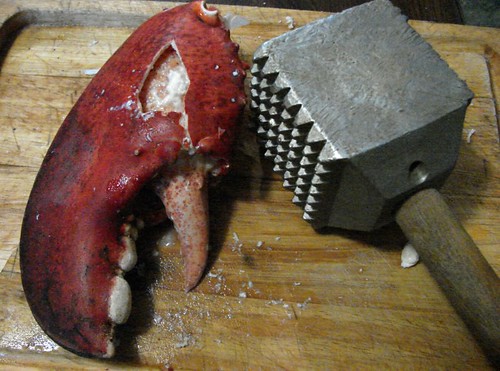
Well, not quite done.  Cooked, yes, but it still needed to be shucked.  The tail was no problem, but the claws were more difficult. This was a hardshell lobster, and the shell was a little more than 1/16-inch thick!  None of the claw crackers I have were up to the task - I ended up using my massive meat pounder, Mjöllnir, to open them up.

When all was said and done, I ended up with a little over two pounds of lobster meat and about a pound of tomalley - a very nice pile of briney deliciousness - and we had the aforementioned lobster cakes for supper.

Above, left to right:  Lobster claw, Mjöllnir.  Prolonged thumping with Mjöllnir resulted
in the small opening shown. 
.

23 April, 2010

Clam & Bacon Pizza

A couple weeks ago, I wrote about Ocean Queen canned smoked scallops.  I thought at the time that they'd be a great ingredient on a seafood pizza (specifically, a bacon/scallop/anchovy/clam pizza.)  So I made one.

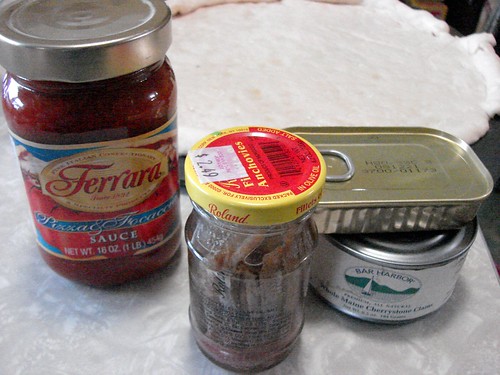
I made a standard batch of pizza dough and set it aside to rise (it's in the background in the picture at left) and assembled the other ingredients:  Ferrara pizza sauce (a snappy and well-seasoned tomato sauce,) a jar of anchovy fillets in olive oil, a can of Ocean Queen smoked scallops, and a can of Bar Harbor Foods littleneck clams.

After the crust had risen for about an hour, I spread it with the sauce and sprinkled it with little chunks of fresh basket cheese and a light scattering of mozzarella.  Then I topped it with pieces of cooked (but not crispy) bacon, a few anchovies arranged like spokes radiating from the center of the pie, and the scallops and clams, properly distributed.  A heavier scattering of mozzarella followed, and it was into the oven for about 15 minutes at 500 F.  The high temperature is essential for a decent crust, and also makes the bacon crispy and gives the cheese a light golden brown finish - just the degree of doneness I love on a pizza.
Now, I know that it's pretty much traditional for food bloggers to present their creations and then write about how amazing and awesome and delicious everything was, but I have to admit to being a little disappointed with the results.  Theoretically, this pizza should have been THE MIGHTY SEAFOOD PIZZA - all the flavors were complimentary to one another, the crust came out great, and Ferrrara sauce can hold its own against most pizzeria sauces.  This should have been a home run.  But truth be told, it just wasn't.  The seafood flavors were far too overwhelming; next time I get a craving for this kind of pizza, I'll leave out either the scallops or the clams - I'm almost certain it was one or the other that pushed the final result over the edge.

.

08 February, 2010

Maine Cold Water Shrimp

One of the things I look forward to every year is the annual Maine shrimp season.  For a couple of months every winter, Maine fishermen bring in a harvest of delicious small pink shrimp (Pandalus borealis) from the cold, clean waters of the North Atlantic.  The shrimp are tiny but unparalleled in flavor, and most important to me, they're a seasonal New England product and fit my general philosophy of eating locally-sourced foods in season (when I'm not eating canned crap that no sane individual will try, like Banner Sausage or Pork Brains in Milk Gravy.)

Although these shrimp are on the small side, I favor them over most other varieties for a number of reasons.  The taste is one: they're sweet and tender with a clean shrimp flavor.  They're easy to shell whether you peel them raw for a recipe or wait until after you cook them.  And most importantly, I know where they come from.

The fact is, the more I learned about how imported farmed shrimp are raised, processed, and transported,  the less eager I was to want to eat them, until I finally just quit the imported southeast Asian prawns altogether. 

Over the weekend, I picked up a four-pound bag of shrimp at the local Shaw's, and we had a great time cooking with these little treasures.

  • Fried Shrimp - After shelling a bunch of the shrimp, I ran them through a egg/buttermilk wash and lightly dredged them in flour seasoned with good Hungarian paprika and Old Bay Seasoning.  With a tossed salad and a basket of waffle fries, we had a wonderful Friday night feast.
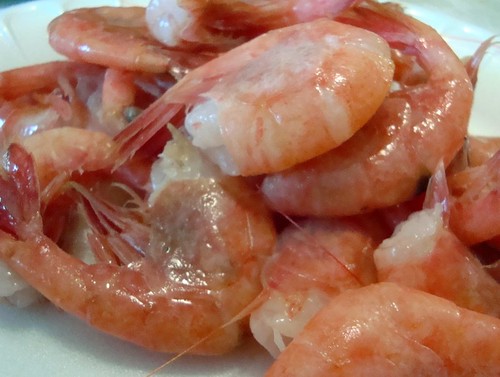
  • Leave the shells on and plunge the shrimp into a pot of boiling water for a little over a minute; chill with a rinse under cold running water, and you're ready for cold peel-and-eat shrimp.  Small but satisfying, the flavor even comes through when you serve them with your own homemade cocktail sauce.
  • How about a delicious pasta dish?  Cook a package of spinach foglie d'ulivo (olive leaf) pasta.  Drain the pasta, toss it with some olive oil to keep it from sticking together, and set it aside.  Meahwhile, melt four tablespoons of butter in a skillet.  Add three small crushed and chopped garlic cloves, a sprinkling of mixed Italian Seasoning, a sprinkling of Hungarian paprika, and a grind of black pepper to taste.  Add about 2 pounds of shelled Maine shrimp and squeeze a fat wedge of lemon over them; shake and toss over medium-high heat until the shrimp is just done - about a minute and a half, and don't overcook them!  To serve, pile up some pasta leaves on a plate, top with as many shrimp as you like, and spoon over some of the sauce that will have formed in the pan as the shrimp was cooked.  It's awesome.
We're lucky this year: The Atlantic States Marine Fisheries Commission's Northern Shrimp Section approved an extension of the 2009-2010 shrimp fishing season to 180 days thanks to abundant stocks and the absence of overfishing, and there are plenty of shrimp hitting seafood counters around New England.  Take advantage of it, and give the Maine shrimp a try. 
.

09 December, 2009

Fishy Delights 26: Surimi Lobster

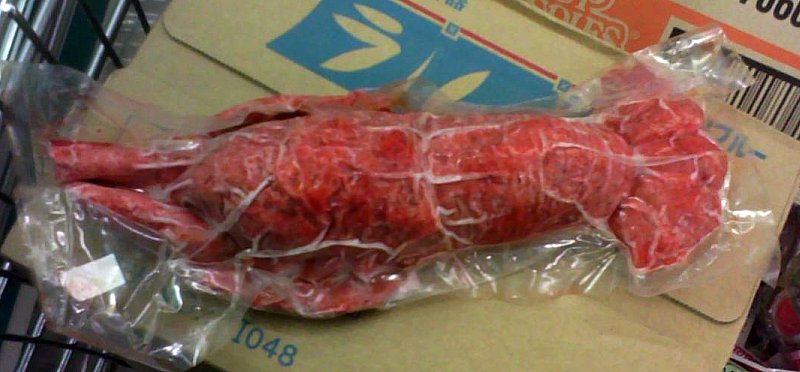
A Dong Supermarket in the Shield Street Plaza in West Hartford never fails to deliver surprises to me, no matter how often I go there. Like last weekend, when I found this full-size lobster replicant made entirely of surimi (the same stuff fake crab legs and cheap-ass deli "seafood" salad is made of.)

Very cool indeed. Wish I could tell you how delicious (or, you know, not) it was, but at $13.50 it cost more than the real thing, so it went right back into the freezer after I snapped this shot.

.

18 October, 2009

Lobster Price Update

Back in June, I wrote about the lingering depression in the lobster market, with live-and-kicking bugs selling in southern Maine hanging at $4.99 a pound, the lowest price in years. Well, we were back in the south-of-Portland area again on Saturday the 17th, and I couldn't believe how much lower prices have gone since then.

Boston dock prices (the price paid to fishermen) are as low as $2.50 a pound, with most lobsters selling for between $2.75 and $3.00 a pound. The retail prices in Maine, from Kittery to Scarborough, was $3.49 to $3.99 a pound.

For some reason, though, restaurant prices in the area aren't reflecting this reality. At Fisherman's Catch in Wells, for example, a twin lobster dinner was being advertised at the "market price" of $21.99. Sorry, but when I can stop at any lobster pound and buy 1½-pounders for $3.99 a pound, there's something not quite right with that story. (End of season or no, I suspect that the reason more people weren't ordering lobster on Saturday had something to do with the price.)

Earlier this month, fishermen were selling lobsters on craigslist at $3.50 a pound - driven there because that direct-to-diner price was still a dollar more a pound than brokers were willing to offer them. It's a great time to buy lobster.
.

10 August, 2009

Lobster Cakes

Lobster prices are still on the low side, and here in New England they've been showing up on sale with some unusual frequency. Last week, Market Basket supermarkets on Massachusetts' North Shore were selling live lobsters for $3.99 a pound, and this weekend Shaw's supermarkets in Connecticut were featuring a 3-day special with live chicken lobsters (that is to say, 1½-pounders) for $4.88 a pound.

At any rate, they're cheap enough that instead of being an occasional treat, I'm able to use them as an ingredient in a way that hasn't been possible in years. We've been taking advantage of that recently. Last night, for example, we made lobster cakes.

If you're already familiar with my crab cake recipe, you already have the basics. But lobster and crab, despite their similarities, are very different in taste and texture, and call for a different mix of seasonings.

Lobster Cakes
Makes 6 cakes

1 egg
1 tablespoon mayonnaise
1 tablespoon lobster tomalley (if you don't have or don't like tomalley,
-- you may substitute another tablespoon of mayo for it.)
½ teaspoon prepared mustard
1 tablespoon white wine or sake
½ teaspoon ground coriander
½ teaspoon celery salt
½ teaspoon salt
¼ teaspoon (heaping) paprika
2 slices of white bread, grated to crumbs
4 cups of lobster meat (that's about what you'd get from 4
-- "chicken" lobsters - 1 ½ pounders)
Panko crumbs
Butter for frying

Whisk the egg, mayonnaise, tomalley, mustard, and sake together until smooth. Add coriander, salt, celery salt, and paprika, and whisk until smooth.

In a large bowl, toss the crumbs with the lobster meat until they are well-combined, then pour the egg mixture over all and stir until evenly moistened.

Line a cookie sheet with waxed paper or baking parchment and sprinkle it well with panko crumbs.

Form the mixture into six patties, either by hand or by using a biscuit cutter as a form. As each patty is formed, place it on the panko crumbs on the cookie sheet. Sprinkle a little more panko on the top of each patty as well. Slide the cookie sheet into the fridge and chill for about an hour or so to let the cakes "set." (This prevents them from falling apart when you fry them.)

Melt a couple of tablespoons of butter in a hot frypan or griddle and brown the lobster cakes on both sides until they are a rich golden brown and heated all the way through. Serve with a garden salad and corn on the cob.

As delicious as these are for a summer supper, I was surprised at how good they are cold the next day - good enough that I would deliberately make them ahead, chill them, and serve them as a light lunch with fresh garden tomato wedges and cucumber slices on the side.


A note about lobster tomalley:

The tomalley is the soft greenish stuff up in the lobster body; it's the lobster's liver and it has a strong and unique flavor that many people (including me) consider to be a delicacy. Too much tomalley probably isn't good for you - the US Food & Drug Administration and Health Canada both advise against eating too much of it because after all, it's liver, and the liver's function in the body is to remove toxins - and therefore, those toxins tend to become concentrated in the liver.

In this recipe, the tomalley is used as a seasoning, and the amount works out to about half a teaspoon per lobster cake (far below the FDA or HC guidelines.) It gives the lobster cakes a richer, more satisfying flavor. But if you're fretful about eating tomalley, or you just think it's too gross to put in your food, feel free to omit it and add an extra tablespoon of mayonnaise.

For more information about lobsters and tomalley, visit The Lobster Queen.


01 July, 2009

What To Do With A Big Bowl of Bug Heads

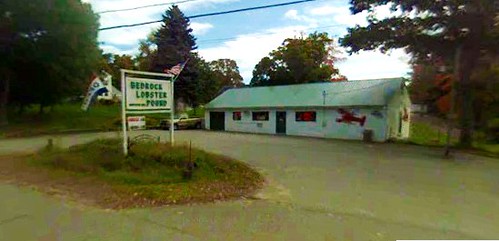
One of our regular stops when we head to Maine is the Bedrock Lobster Pound on US1 in York. It's an unassuming little buiding set back from the road, with the best lobster prices on the coast. When we're staying a few days, we'll drop in on the way back to the camper or the cabin and pick up a few bugs for supper. When we're on the way home, though, we go for something no less delicious, but a lot less elegant: Lobster bodies, aka "bugheads."

Not all of a lobster's deliciousness is found in the claws and tail, and some lobster pounds that provide restaurants and roadside clamshacks with tails and claws for lobster rolls don't just throw the bodies to the seagulls. Bedrock, for example, bags lobster bodies in lots of twelve, which this week were selling for $2.00 a bag. We bought two bags and stuck them in the cooler to keep them fresh on the ride home.

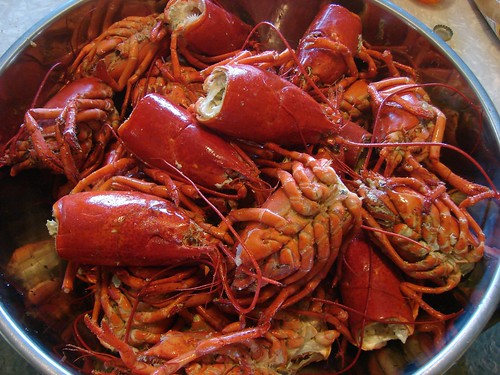
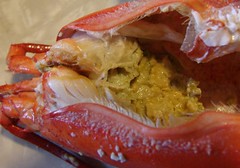
The next day, my wife Maryanne and I set to work picking our $4.00 bargain. We started by stripping off all of the little legs. The meat in the legs comes out easily if you break off each joint individually from the base to the tip. Once that was done we removed the carapace, or red shell segment, from each body. Inside the carapace, you'll find the creamy green liver, called the "tomalley." We scooped all the tomalley and all the jelly-like white fat from inside the bodies into a bowl along with any red coral (lobster roe) that we found. Tomalley is delicious all by itself spread on toast, but it can also be used to give lobster flavor to dips and spreads.

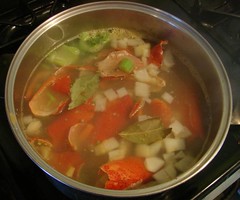
As we emptied the shells, we broke them up into little pieces and put them in a stockpot to make lobster stock.

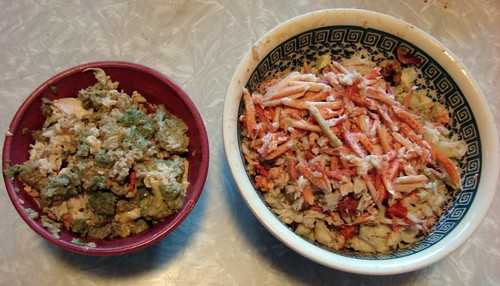
And that left us with a pile of shelled, legless bodies. This is the tedious part: Maryanne and I spent about an hour and a half breaking the bodies open down the middle and picking out the meat in the little "pockets" along the belly. In an average pound-and-a-half sized lobster, there are two large chunks of meat where the large arms meet the body, and eight smaller chunks - one in each of the pockets where the smaller legs meet the body. When all was said and done, we ended up with about five cups of picked meat, and about two cups of tomalley/body fat/roe.

Recipes:

Tomalley Croutons / Tomalley Butter

1 teaspoon garlic, finely minced
2 tablespoons onion, chopped
4 tablespoons butter, softened
1 tablespoon chopped parsley
1/2 cup lobster tomalley
salt, pepper, and paprika to taste
1 crusty French baguette

Sauté the garlic and onion in 1 tablespoon butter. Allow to cool, then mix with the remaining butter and parsley. Use a fork to blend in the tomalley, then season to taste with salt, pepper, and paprika.

Slice the baguette 3/8 inch thick and toast on both sides. Spread each slice with the tomalley-butter mixture. Place on a sheetpan and run under the broiler just until the croutons are crispy and hot; the tomalley butter will melt deliciously into the crouton. Serve hot and cris;y.

You can make a bigger batch of tomalley butter if you have more than the tomalleys from two lobsters; just scale the rest of the ingredients accordingly.

If you decide not to make tomalley croutons, try taking a big dab of the tomalley butter and spreading it to melt over a grilled steak. As surprising as this sounds, this tastes absolutely amazing.


Lobster Salad
Makes 2 servings

1 cup picked lobster meat
3 tablespoons finely chopped sweet onions
3 tablespoons finely chopped celery
1 tablespoon sweet pickle relish
Mayonnaise sufficient to moisten
salt and pepper to taste

Combine all ingredients and mix with a fork. Serve in sandwiches, or on crackers, or in the center of a scooped-out fresh tomato.


Lobster Stock
Makes 2 quarts

Lobster shells
1 large onion, chopped
2 celery stalks, chopped
1 large carrot, chopped
2 bay leaves
8 or 10 peppercorns
a handful of parsley
Water

Break the lobster shells into pieces and cram as many as you can into a 10-quart stockpot. Add onions, celery, carrots, bay leaves, peppercorns, and parsley then cover with water. Bring to a boil over high heat, then turn the fire down low and simmer for several hours. Strain stock through cheesecloth and refrigerate or freeze until needed.

To make a broth rather than a stock, return the stock to the pot after straining and simmer over medium heat until the stock has been reduced by half.

Season stock or broth to taste after simmering is finished to avoid concentrating the salt.


22 June, 2009

Charlie's Seafood, Lynn MA

When tourists to the North Shore area of Massachusetts go looking for whole-belly fried clams, they usually go to places like the Clam Box in Ipswich, or J T Farnham's or Woodman's in Essex. The clams at all three places are excellent.

But on a recent trip to the area during which I sampled clams from several different eateries, I discovered a hidden gem just south of Salem: Charlie's Seafood in Lynn, MA.

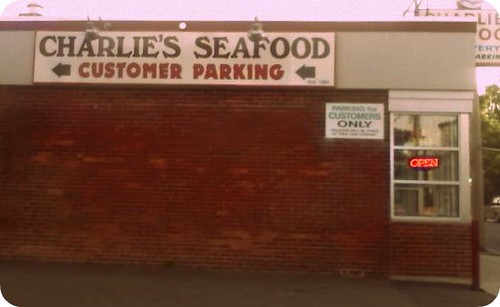
Lynn has a reputation for bad neighborhoods, crime, and drugs, but not every street in town is "bad." Charlie's is on Essex Street not too far from Swampscott, and while the neighborhood is no Beverly Hills, it isn't really horrible either. Michael and I parked the car around back and went in the side entrance.

The building may look old from the outside, but inside it was immaculately clean. The ordering counter was bright and fresh, staffed by a friendly and helpful young lady who took our small order - a small box of fried clams - cheerfully. The dining area was bright and airy with roomy booths and a few tables.

We'd been eating fried clams all day, and were feeling a touch "clammed out" by the time we got to Charlie's, so perhaps our little snack here was starting at a disadvantage. But by our second taste, Michael said, "This is the catch of the day." The clams were plump, fresh, and delicious - truly the best we'd had on this particular Clam Crawl.

Although we didn't try anything else on this visit, a few other customers were in and out, buying various other menu items. The fish and chips looked first-rate and so did the order of fried squid that came out of the kitchen about midway through our nosh. There were a couple other folks in there for the clams as well. No one was disappointed, and several of them were obviously regulars.

At the end of July, my family is getting together with a group of friends for a picnic and a full-bore Clam Crawl. Charlie's will definitely be on the itinerary.

Charlie's Seafood
188 Essex St
Lynn, MA 01902-1745
(781) 595-8953

Charlie's had no website of its own at the time this entry was published.

.