In a recent article in Forbes, Larry Olmstead reveals the true nature of beef sold in the United States as "Kobe beef." It's quite a read, and I recommend it.
Read the article here:
Food's Biggest Scam: The Great Kobe Beef Lie by Larry Olmstead.

Showing posts with label news. Show all posts
Showing posts with label news. Show all posts
16 April, 2012


22 February, 2012
Grote & Weigel Is Staying Open!
Good news for hot dog lovers in Southern New England - Grote & Weigel, which had recently announced their closure, has been purchased by Chicopee Ma-based Rachael's Food Corporation (a division of J. Polep.) After a brief hiatus, production will resume at Grote & Weigel's Bloomfield CT facility. Rachael's has also made it known that current Grote & Weigel employees will be retained.
You can read the press release here, at the Hartford Courant's website.

When I first heard that they were closing, I scoured supermarkets in my area and managed to buy about 25 packages of Grote & Weigel Natural Casing hot dogs, stashing them in the freezer for later enjoyment. Tonight, I'm celebrating their return by grilling up somma them dogs.
27 January, 2012
Grote & Weigel Out of Business

For over 120 years, Grote & Weigel has been making sausages, hams, smoked turkeys, and hot dogs in Connecticut, under their own brand and as private label products for various companies in New England.
No longer. The business is closed and all the Grote & Weigel product that will ever be made is out in the retail pipeline right now - when it's sold out, it's gone forever. The building and all the meat processing equipment are to be sold at auction in February, bringing a century of Connecticut food tradition to a close.
27 September, 2011
Doritos Creator Arch West Dies at Age 97
 |
| Photo courtesy of the West family. |
Arch West was a marketing vice president for Frito Lay, Inc. in 1964 when he took a family vacation to San Diego that would change the snack food industry forever.
Hungry for road munchies, the family pulled up to a roadside stand and bought a bag of tortillas which had been cut up and fried to greasy, crispy awesomeness. Arch knew with one bite that he had stumbled upon an epic snack.
Back on the job, Arch pitched his idea to his corporate overlords: a thin tortilla chip - heartier than the company's best-selling Lays Potato Chips, lighter than Frito's Corn Chips. The company was skeptical, but when they agreed to do some consumer testing and found that the chips were very well-received, the new snack dubbed Doritos were introduced to California test markets in 1966. They were so popular that Frito Lay rolled them out nationwide in 1967, and Doritos have been unstoppable ever since.
Today's Doritos are a little different than the originals. Besides being available in a wide variety of regular flavors, Frito Lay brings out a stream of special flavors and packages every year. And in a mid-1990's revamp of the recipe, the chips were made a little thinner, a little larger, and given rounded corners.
Mr. West was born in Indianapolis in 1914 and graduated Franklin College where he was a member of the Delta Rho fraternity. He served as a Lieutenant in the US Navy during WW2 and worked in advertising on Madison Avenue in NY before being lured to Texas by the Frito Company, which offered him a vice presidency in marketing. After retirement, he and his late wife Charlotte served as volunteers on his local FEMA's disaster relief team. He's survived by three sons, two daughters, and eighteen grand- and great-grandchildren. The family plans an October 1 service and burial, and daughter Jana Hacker says the family plans to sprinkle the grave with Doritos before lowering his remains to rest.
View Mr. West's obituary on legacy.com here.
Various news stories were used as sources for this post.
28 December, 2010
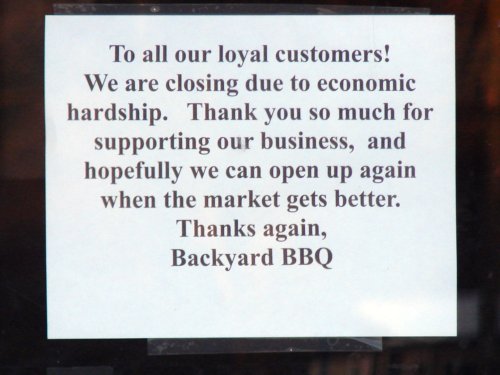
The Fire Goes Out at Backyard BBQ in Enfield

Back in April 2010, I wrote about a brand new barbecue place that had opened up in my hometown. It was called Backyard BBQ. Their pulled pork was outstanding, and they also made the best barbecue baked beans anywhere, hands down.
Unfortunately, I headed that way last week - just before Christmas - to find the store dark with a sign in the window reading:
"To all our loyal customers! We are closing due to economic hardship. Thank you so much for supporting our business, and hopefully we can open up again when the market gets better."
Bummer.
Backyard BBQ had attracted some decent attention in the press. Reviews in both the Hartford Courant and the Hartford Advocate were generally positive, and by the end of summer they seemed to be fairly busy. I guess looks aren't everything, though. I'm sorry to see them go.
04 December, 2010
Bacon Prices Continue to Go Insane
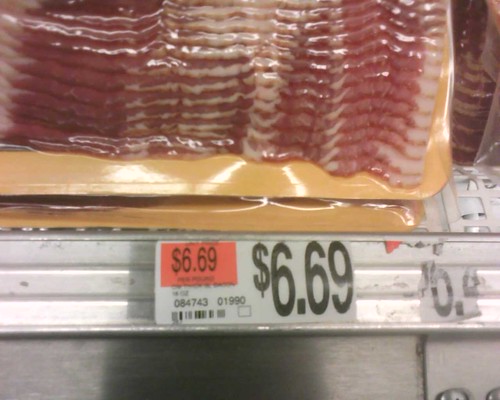
It was "sticker shock" at the supermarket this week, where bacon prices have continued to go through the roof. Look at that: $6.69 a pound for Oscar Mayer bacon at Stop & Shop, where even the generic no-name crap bacon (the "Guaranteed Value" brand") is now $2.99 a pound - a 50% increase from last year.
I first noticed bacon prices rising in August, but a summertime price bump isn't unusual. August is when everyone's backyard tomatoes are in their full glory, and bacon prices often tick up a bit then as loads of people buy it to make the archetypal summer sandwich, the BLT. This year, however, summer prices didn't drift back down.
According to the Federal Bureau of Labor Statistics' Consumer Price Index, bacon prices have been climbing for seven straight months as of October (the last month for which there is data.) As of right now, bacon prices are up an average of 33% over last year at this time.
There's a combination of factors at work here. Remember the H1N1 Swine Flu scare last year? That caused an overall reduction in hog herds. Higher feed prices and overall recessionary conditions also helped make raising hogs a money-losing proposition for a lot of farmers. And because pork bellies (the pigmeat from which we get bacon) is a traded commodity, market pressure from speculators has helped keep bacon prices higher than other pork cuts.
In this August article in the Birmingham [AL] News, Business Editor Stan Diel said, "The good news for those who like bacon with their eggs in the morning is that it doesn't take nearly as long for farmers to raise new hogs, increasing supply, as it does to raise cattle. And with hogs once again profitable, farmers are raising more of them." Unfortunately, since then bacon prices have still risen about 7% a month, and my own price surveys in the supermarkets haven't shown any downward trend.
In recent weeks, many of the supermarkets around me have started to run sales on bacon, which is taking some of the sting away. But when you're starting at a regular price getting close to seven bucks a pound, even the sale prices are expensive compared to last year.
01 December, 2010
David Glass Is Back!
 |
| Photo from www.davidglass.com |
According to this story by Korky Vann at ctnow.com, David Glass is back - for now, at least - in a "pop-up" bakery in South Windsor. Glass and his wife Vivie are calling the new shop "Vivie and David Glass' Delicious Desserts," and will be the only employees, baking during the week and opening to the public for tastings and sales on Saturdays through December 18.
This Saturday, December 4, will the first tasting and sale with the bakery open from 9 am to 4 pm. The new location is at 400 Chapel Road in South Windsor. For more information, click the link on the beginning of this post to go to the ctnow.com article.
18 August, 2010
Sardine Cannery To Reopen Processing Lobster
 Back in February, I wrote about the closing of the last remaining sardine cannery in the US. Bumble Bee Foods, citing a reduction in US herring catch limits, shut the former Stinson Cannery in April. It was a big blow to the town of Prospect Harbor, where unemployment is high. It was big news at the time - sardine canneries were once a huge part of the New England economy, especially in Maine - and the story was widely reported at the time.
The former Stinson cannery is in the news again, although this time it's not attracting nearly as much attention (probably because it's good news this time.) Live Lobster Company of Chelsea MA has agreed to purchase the plant with an eye toward expanding its operations into processed lobster.
For now, the company wants to use the plant as a purchasing station for locally-caught bugs, and they want to begin operations as soon as possible with lobster buying and bait sales. The company's primary business is live lobster wholesaling to customers in Europe, Asia, and the United States, but the availability of the cannery has presented them with an opportunity to expand into processed lobster sales.
Eventually, Live Lobster Co. expects to have about 130 employees at the Prospect Harbor plant (the same number of jobs lost when Bumble Bee moved out.) And because the lobster catch is seasonal (June through November) they plan to expand into shrimp and crab canning as well, to keep their employees working year-round.
Links:
14 June, 2010
Jimmy Dean, 1928 - 2010

Musician, actor, and sausagemaker Jimmy Dean died on Sunday, age 81.
Although these days he's probably best known for the line of sausage products bearing his name, he got his first taste of fame in 1961 when he recorded Big Bad John, a #1 hit on the Pop and Country charts. The song not only won a Grammy in 1962 for Best Country & Western Recording, but also convinced his record label, Columbia, not to drop him.
His acting credits include a three-season run of his television variety show, The Jimmy Dean Show (1963-65), a recurring role on NBC's Daniel Boone as Boone's friend Josh Clements, and a 1971 appearance in the James Bond flick Diamonds Are Forever as the Howard Hughes-inspired reclusive tycoon Willard Whyte.
His early experiences with Columbia, however, made him realize that he should have a backup career in place in case his star faded. In 1969, he called upon his childhood experience on the family farm and founded the Jimmy Dean Meat Company. It was an almost instant success thanks to his tireless efforts - he personally supervised operations at the company, developed the recipe for the famous sausage that bears his name, and appeared in every one of the early advertisements for the brand, a process that he later described as "exhausting."
In 1984, he sold the company to Consolidated Foods, which later became Sara Lee, but stayed on as the brand spokesman. In 2003, Sara Lee apparently exercised the Douchebag Clause in their contract and dumped him, after which he no longer had any connection with the company.
RIP, Jimmy Dean.
.
24 March, 2010
High Fructose Corn Syrup: Bullshit Exposed
For the past two years, an advertising campaign by the Corn Refiners' Association has tried to convince the public that people who avoid high-fructose corn syrup are misinformed tongue-tied idiots.
"You know what they say about high-fructose corn syrup..."
"What? That it's identical to sugar? That it's fine in moderation?"
"Uh, I...hurr hurrf durf durrp. Duh.."
Well, here's a sweet surprise for the corn pimps at the CRA.
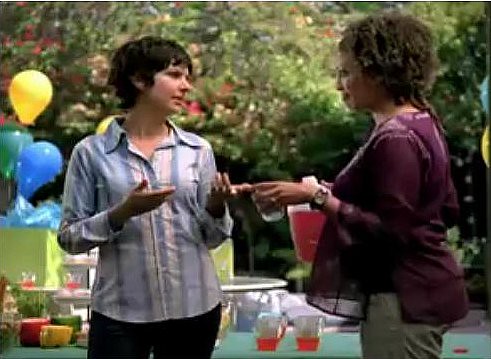 |
| You've seen these ads. |
"What? That it's identical to sugar? That it's fine in moderation?"
"Uh, I...hurr hurrf durf durrp. Duh.."
Well, here's a sweet surprise for the corn pimps at the CRA.
 |
| Photo by Denise Applewhite, courtesy of Princeton University. |
A research team at Princeton University has demonstrated a clear link between high fructose corn syrup and obesity. The team - undergraduate Elyse Powell, psychology professor Bart Hoebel, visiting research associate Nicole Avena and graduate student Miriam Bocarsly, pictured at left - published the results of two studies earlier this month.
In the first study, one group of male rats were given water sweetened with high-fructose corn syrup in addition to a standard diet of rat chow. A second group of male rats received water sweetened with table sugar (sucrose,) with the standard diet. Even though the HFCS solution was only half as concentrated as level to be found in most sodas, and the sugar in the sucrose solution was the same as found in soda, the high-fructose corn syrup-ged group gained much more weight
The second experiment monitored weight gain, body fat and triglyceride levels in rats with access to high-fructose corn syrup over a period of six months. Rats on a diet rich in high-fructose corn syrup showed abnormal weight gain, elevated triglycerides, and increases in body fat compared to rats on a standard rat chow diet. Animals with access to high-fructose corn syrup gained 48 percent more weight than those eating a normal diet.
In an article published on Princeton's website, psychology professor Bart Hoebel said:
"Some people have claimed that high-fructose corn syrup is no different than other sweeteners when it comes to weight gain and obesity, but our results make it clear that this just isn't true, at least under the conditions of our tests. When rats are drinking high-fructose corn syrup at levels well below those in soda pop, they're becoming obese -- every single one, across the board. Even when rats are fed a high-fat diet, you don't see this; they don't all gain extra weight."
Consumers, of course, have had a bad feeling about high-fructose corn syrup for years, which is why the Corn Refiners Association has to advertise the so-called "benefits" of HFCS to begin with. And the backlash against HFCS is growing as shoppers read ingredient panels and realize just how prevalent the ingredient is. How can something be used "in moderation" when it is virtually everywhere?
And companies are following the lead, giving customers what they want. ConAgra has announced that starting in May 2010, Hunt's Ketchup will be reformulated with sugar rather than HFCS based on customer demand and the results of taste tests that have proven consumers can not only taste the difference between HFCS and sugar, but they prefer sugar. Other companies moving from corn sweeteners to sugar include Del Monte Light Fruit, Kraft Foods' Wheat Thins, Oroweat breads, Pillsbury, Snapple, and PepsiCo's GatorAde.
The Corn Refiners Association isn't going to go down without a fight, though. They realize that customers are turning against them despite their best efforts at advertising and spin, so in January, they managed to convince the FDA to allow high-fructose corn syrup to be listed on ingredient labels simply as "corn syrup." The FDA has since reconsidered and has decided to review that decision, but it certainly wouldn't hurt if you wrote or emailed the FDA letting them know what you think about that labeling rule.
Food and Drug Administration
10903 New Hampshire Ave
Silver Spring, MD 20993-0002
Click here to go to the FDA's Contact Website
.
Consumers, of course, have had a bad feeling about high-fructose corn syrup for years, which is why the Corn Refiners Association has to advertise the so-called "benefits" of HFCS to begin with. And the backlash against HFCS is growing as shoppers read ingredient panels and realize just how prevalent the ingredient is. How can something be used "in moderation" when it is virtually everywhere?
And companies are following the lead, giving customers what they want. ConAgra has announced that starting in May 2010, Hunt's Ketchup will be reformulated with sugar rather than HFCS based on customer demand and the results of taste tests that have proven consumers can not only taste the difference between HFCS and sugar, but they prefer sugar. Other companies moving from corn sweeteners to sugar include Del Monte Light Fruit, Kraft Foods' Wheat Thins, Oroweat breads, Pillsbury, Snapple, and PepsiCo's GatorAde.
The Corn Refiners Association isn't going to go down without a fight, though. They realize that customers are turning against them despite their best efforts at advertising and spin, so in January, they managed to convince the FDA to allow high-fructose corn syrup to be listed on ingredient labels simply as "corn syrup." The FDA has since reconsidered and has decided to review that decision, but it certainly wouldn't hurt if you wrote or emailed the FDA letting them know what you think about that labeling rule.
Food and Drug Administration
10903 New Hampshire Ave
Silver Spring, MD 20993-0002
Click here to go to the FDA's Contact Website
.
20 March, 2010
Sunchips Introduces First Eco-friendly Chip Bag
 I love Sunchips. For a long time, they've been one of my favorite snack foods because they have the satisfaction of chips and the sweetness of the whole grains in them. Together, they conquer not only my appetite but also my craving for delicious chippy goodness.
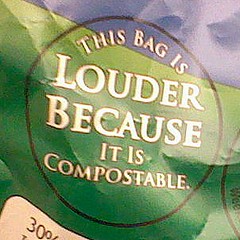
On Earth Day this year, Frito-Lay introduced the first ever completely biodegradable chip bag. In thirteen weeks, this bag (made of completely renewable plant fibers,) will completely decompose. The chips inside are the same Sunchips you know and love; only the bag is different. However, this bag does have an extremely annoying quality to it: It's one loud bag. The fibers that make up the bag are all completely natural, so the construction of the bag makes it sound very much like a cross between a space blanket and a sheet of tinfoil.
Link: Sunchips Website
05 March, 2010
ConAgra Discontinues Penrose Sausage In Jars
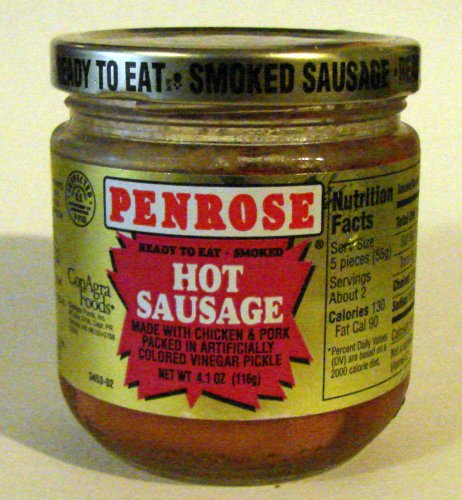
Back in October 2009, I wrote a short review of Penrose Hot Sausage, a pickled sausage product made by ConAgra. I didn't like them very much, but several readers disagreed with me and left comments about how much they enjoyed them.
One of the comments mentioned that the sausages had been discontinued, and I decided to do some Googling. The first thing that I noticed was that every online source that I found listed all sizes of Penrose Hot Sausage as "sold out." When I looked up the product at ConAgra's website, I found that it was no longer listed in the drop-down menu of Penrose items offered by the company.
Finally, I called ConAgra's Penrose consumer help line at 1.800.382.4994 and spoke to a pleasant young lady who identified herself as "Bree." She confirmed to me that Penrose has discontinued all product in jars, and that the only Penrose items currently being packaged are in snack-sized shrinkwrap. She said the decision was made by ConAgra about 6 months ago, which is why it has become increasingly difficult for fans of the sausage to get their fix.
If you're a fan of Penrose Hot Sausage and you miss your favorite snack, it certainly wouldn't hurt for you to call ConAgra and politely ask them to bring it back. They might not listen, of course, but it never hurts to try.
In the meantime, may I recommend you try Long Lake Pickled Foods' Hot Pickled Polish Sausage? For fans of Penrose, it might not be the same, but you might find you like it on its own merits.
.
.
27 February, 2010
The Last Sardine Cannery In the US to Close
For a hundred years, sardines have been processed in Prospect Harbor, Maine, at the Stinson Seafood cannery. It was once one of 46 sardine canneries that dotted the coast of Maine at the peak of the sardine fishery in the early 1950's. Now the Beach Cliff Sardines fisherman sign - a painted cutout that stands as tall as a telephone pole at the edge of the building's parking lot - looks out over the town from the last remaining sardine cannery in the US.
Last remaining until April, that is.
San Diego-based Bumble Bee Foods LLC, the current owner of the plant, announced on 17 February 2010 that they were ending operations in Prospect Harbor and closing the cannery. Federal catch limits for herring - reduced to 180,000 metric tons in 2004 and further reduced to 91,200 metric tons this year - are blamed by the company for the closing. They claim that the tighter limits have made it uneconomical to continue business there - even though Bumble Bee had previously told workers that they were committed to keeping the plant open regardless of the reduced catch level.
Maine is losing another bit of her history and her heritage. Prospect Harbor is losing a piece of its identity. And 130 people living there are losing their jobs, forced out of work in a county already struggling with a 10.9% unemployment rate. Tender-hearted Bumble Bee says that they'll offer laid-off employees jobs that open up at their other plants in New Jersey, Canada, California, and Puerto Rico. Mighty big of 'em. Maybe they think we've forgotten that the Snow's Clam Chowder that is now canned in Cape May NJ was also once a Maine product before they moved production out of New England and changed the recipe to slop.
Prospect Harbor, a village on the Schoodic Penninsula about 45 minutes east of Ellsworth, doesn't have many jobs to offer, and this closing is going to affect more than just the 130 people directly employed by the factory. Area lobstermen, for example, are already being squeezed by historically low lobster prices. They were able to buy herring for bait directly from the plant at a good, inexpensive price. After April, lobster bait is going to be more expensive, further cutting into their pockets.
And in the meantime, selectmen and other officials from the affected towns are working to help find a buyer for the cannery and explore alternatives to sardine processing.
.
13 February, 2010
SuperValu Selling All Connecticut Shaw's Supermarkets

Well, the rumors we've been hearing for the past few months are true: Minnesota-based SuperValu Inc. is pulling out of the Connecticut market, announcing today that they are selling all of the 18 Shaw's supermarkets they currently operate here. Most of the stores are being sold to New Jersey's Wakefern Food Corporation, which owns the Shop-Rite and Price/Rite supermarkets. A handful of othes will be purchased by Stop & Shop, and SuperValu is still trying to find buyers for the remaining two that haven''t been spoken for, which will be closed by the end of March.
Here's a breakdown of the store locations being closed, and what will be opening in their places:
- Canton - Wakefern, will reopen as Shop-Rite
- Clinton - Wakefern, will reopen as Shop-Rite
- Darien - will reopen as Stop & Shop
- East Hartford - Wakefern, will reopen as Shop-Rite. Wakefern already has a large Price/Rite on Main Street in the center of East Hartford, but there is no information yet what will happen to that store.
- Enfield - Wakefern, will reopen as Shop-Rite
- East Hampton - will reopen as Stop & Shop
- Fairfield - Wakefern, will reopen as Shop-Rite
- Hamden - Wakefern, will reopen as Shop-Rite
- Manchester - No buyer found yet
- New Fairfield - will reopen as Stop & Shop
- New Haven - No buyer found yet
- Newington - will reopen as Stop & Shop
- Southbury - Wakefern, will reopen as Shop-Rite
- Stratford - Wakefern, will reopen as Shop-Rite
- Vernon - will reopen as Stop & Shop
- Wallingford - Wakefern, will reopen as Shop-Rite
- West Hartford - Wakefern, will reopen as Shop-Rite
- Windham - Wakefern, will reopen as Price/Rite
Shaw's has had a tough time competing in Connecticut; they entered the state in the mid 1990's and at their peak operated 26 stores here. In about 2005, they started closing down stores that weren't doing so well. At one time they were the only supermarket chain operating stores in all six New England states, but that distinction will be over soon.
Shaw's pulling out of Enfield also means that they will no longer be serving the Western Massachusetts area - the closet one to here will be Sturbridge, and unfortunately they've never had a special that was worth driving that far. I'm glad that we've got a Shop Rite opening here, though - perhaps the employees affected by the Shaw's closing will be able to keep their jobs working for Shop Rite.
.
02 November, 2009
GROUND BEEF RECALL - NEW ENGLAND & NY
This news directly affects my home turf of New England and upstate New York:
Fairbanks Farms of Ashville NY is recalling more than half a million pounds of ground beef which was distributed in New England and New York. The meat is believed to be contaminated with E. coli O157:H7 and is related to a cluster of illnesses in Connecticut, Massachusetts, and Maine, and has been linked to two deaths - one in New Hampshire and one in the Albany NY area.
According to the USDA, the meat was sold in packaging by the following companies:
Trader Joe's
Price Chopper
Lancaster and Wild Harvest
Shaw's
BJ's
Ford Brothers
Giant
In addition, wholesale cases of 10-pound chubs labeled "FAIRBANK FARMS FRESH GROUND BEEF CHUBS." are also recalled. Each case bears the establishment number "EST. 492" inside the USDA mark of inspection; has package dates of "09.14.09," "09.15.09," or "09.16.09;" and sell-by dates of "10.3.09," "10.4.09," or "10.5.09. These products were distributed to retail establishments in Maryland, Massachusetts, North Carolina, New Jersey, New York, Pennsylvania, and Virginia for further processing. Unfortunately, these chubs are meant to be broken down, opened, and repackaged by individual stores and by the time the retail packages are on the shelves the sale dates and original labeling will have been long changed. The USDA recommends that concertned consumers contact their points of purchase for more information.
At the current time, the USDA's Retail List emphasizes all Shaw's supermarkets in Maine, Vermont, New Hampshire, Massachusetts, Connecticut and Rhode Island and all Price Choppers in New York, Vermont, Connecticut, and Pennsyvania.
Important links:
Recall notice on the USDA website
USDA photocopy of various labels associated with the recall (PDF file)
USDA Retail List for this recall (PDF)
.
According to the USDA, the meat was sold in packaging by the following companies:
Trader Joe's
- 1-pound packages of "TRADER JOE'S BUTCHER SHOP FINE QUALITY MEATS GROUND BEEF 85/15."
- 1-pound packages of "TRADER JOE'S BUTCHER SHOP FINE QUALITY MEATS GROUND BEEF 80/20." NOTE: The sell-by dates for the above two products may be October 6 or 7, 2009.
- 1-pound trays of "TRADER JOE'S BUTCHER SHOP FINE QUALITY MEATS GROUND BEEF PATTIES 96/4 EXTRA LEAN."
- 1-pound trays of "TRADER JOE'S BUTCHER SHOP FINE QUALITY MEATS GROUND BEEF PATTIES 85/15."
Price Chopper
- 1- and 2.5-pound trays of "PRICE CHOPPER MEATLOAF & MEATBALL MIX."
- 1-pound trays of "PRICE CHOPPER EXTRA LEAN GROUND BEEF 96/4."
- 1-pound trays of "PRICE CHOPPER FRESH GROUND BEEF CHUCK FOR CHILI 80% LEAN 20% FAT."
Lancaster and Wild Harvest
- 1-pound trays of "LANCASTER BRAND 96/4 EXTRA LEAN GROUND BEEF."
- 1- and 2-pound trays of "LANCASTER BRAND 90/10 GROUND BEEF."
- 1-pound trays of "WILD HARVEST NATURAL 85/15 ANGUS GROUND BEEF."
Shaw's
- 1- and 2-pound trays of "SHAW'S FRESH GROUND BEEF 93/7."
- 1-, 2- and 3-pound trays of "SHAW'S FRESH GROUND BEEF 80/20."
- 1- and 3-pound trays of "SHAW'S FRESH GROUND BEEF 75/25."
- 1.3-pound trays of "SHAW'S FRESH GROUND SIRLOIN BEEF PATTIES 90/10."
- 1.3-pound trays of "SHAW'S FRESH GROUND ROUND BEEF PATTIES 85/15."
- 1.3-pound trays of "SHAW'S FRESH GROUND BEEF PATTIES 80/20."
- 3-pound trays of "SHAW'S FRESH GROUND BEEF PATTIES FAMILY PACK 80/20."
- 1-pound trays of "SHAW'S ANGUS GROUND BEEF 85/15."
- 1-, 2- and 3-pound trays of "SHAW'S FRESH GROUND ROUND BEEF 85/15."
- 1-pound trays of "SHAW'S 90% NATURAL GROUND BEEF."
- 1-pound trays of "SHAW'S 85% NATURAL GROUND BEEF."
- 1-, 2- and 3-pound trays of "SHAW'S FRESH GROUND SIRLOIN 90/10."
- 1-pound trays of "MEATLOAF & MEATBALL MIX."
BJ's
- 5-pound trays of "FRESH GROUND BEEF, CONTAINS 15 % FAT" patties.
- 3- and 5-pound trays of "LEAN GROUND BEEF, CONTAINS 7% FAT."
- 2.5-pound trays of "MEATLOAF & MEATBALL MIX."
Ford Brothers
- 3-pound trays of "FRESH GROUND BEEF, CONTAINS 20% FAT" patties.
Giant
- 1-pound trays of "GIANT EXTRA LEAN GROUND BEEF 96/4."
- 1-pound trays of "GIANT MEATLOAF & MEATBALL MIX."
- 1-pound trays of "GIANT NATURE'S PROMISE GROUND BEEF."
- 1-pound trays of "GIANT NATURE'S PROMISE GROUND BEEF PATTIES."
In addition, wholesale cases of 10-pound chubs labeled "FAIRBANK FARMS FRESH GROUND BEEF CHUBS." are also recalled. Each case bears the establishment number "EST. 492" inside the USDA mark of inspection; has package dates of "09.14.09," "09.15.09," or "09.16.09;" and sell-by dates of "10.3.09," "10.4.09," or "10.5.09. These products were distributed to retail establishments in Maryland, Massachusetts, North Carolina, New Jersey, New York, Pennsylvania, and Virginia for further processing. Unfortunately, these chubs are meant to be broken down, opened, and repackaged by individual stores and by the time the retail packages are on the shelves the sale dates and original labeling will have been long changed. The USDA recommends that concertned consumers contact their points of purchase for more information.
At the current time, the USDA's Retail List emphasizes all Shaw's supermarkets in Maine, Vermont, New Hampshire, Massachusetts, Connecticut and Rhode Island and all Price Choppers in New York, Vermont, Connecticut, and Pennsyvania.
Important links:
Recall notice on the USDA website
USDA photocopy of various labels associated with the recall (PDF file)
USDA Retail List for this recall (PDF)
.
15 August, 2009
Desserts by David Glass Closing After 28 Years
After nearly 30 years of providing amazingly delicious desserts at both the wholesale and retail level, Desserts by David Glass is closing its doors, a victim of the economic downturn and the loss of its biggest wholesale customer.Owner David Glass started creating his high-end cakes in a house on Sargent Street in Hartford before moving operations to the old Colt factory under the blue onion dome and, most recently, to a building on Blue Hills Avenue in Bloomfield.
For the past few years, the bakery has hosted tastings and direct retail sales to the public at the Bloomfield bakery. My family and I would stop in on occasional Saturday mornings to sample slices of heaven and buy a cake or two to bring home. We even had a tour of the bakery and operations area one Saturday morning. Now and again Mr. Glass would stroll through the retail area to chat with customers; the atmosphere was always friendly and relaxed and seemed more like a party than a sales event.
And although his desserts were treasured by local people, he had a wide following; his cakes were sold by Zabar's in NYC, by Whole Foods, and at Stew Leonard's, as well as in restaurants all over the Northeast.
They were also sold at Trader Joe's - nearly half of their business was done with the Trader Joe's account - and unfortunately that proved to be David Glass' undoing. Trader Joe's decided that they were paying too much for the desserts and tried to negotiate a wholesale price that was less than it cost Desserts by David Glass to produce the goods. Glass couldn't afford that kind of "deal" but Trader Joe's wouldn't budge. The relationship ended and it was the beginning of the end.
In an article about the closing published in the Hartford Courant, Glass said that he hopes to reopen as a smaller local bakery because he believes his desserts still have a local following.
He's right. They do. And I hope he lands on his feet.
Photo of David Glass from www.davidglass.com
29 June, 2009
Lobster Prices Still Low
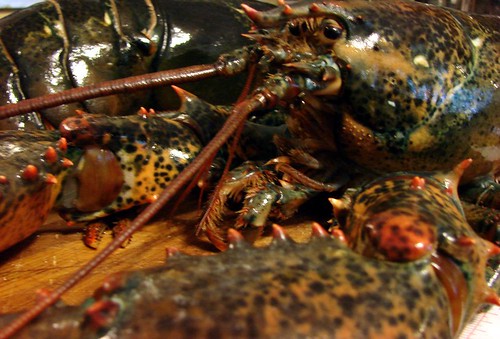 Looks like it's going to be another hard season for lobstermen and good season for lobster eaters this summer. Although wholesale market prices for live lobsters are up from last year, they haven't rebounded significantly. Market prices in Boston range from $4.00 to $4.75 for hardshells and $3.25 to $3.75 for softshells and culls (lobsters with just one claw.) And, while the Boston Market Report indicates that supply is light and demand moderate, the pressure still hasn't forced prices higher
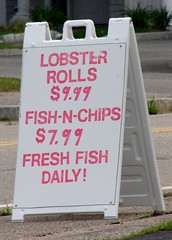
This kind of low price is mixed news for diners and tourists in Massachusetts and Maine. I was down to Maine this past weekend, and most lobster pounds were selling live bugs for $4.99 a pound from Kittery to Kennebunk (the price was slightly higher along the New Hampshire coast and the North Shore of Massachusetts, but not much.) Lobster dinners were the same price they've been in awile, though, holding at about $20 for "twin lobsters." And lobster rolls were also holding steady from last year at $8.99 to $9.99 with a few places as low as $7.99.
 Fuel prices are rising again after a brief respite, and bait prices haven't eased off either. Couple that with maintenance and repair costs to boats and equipment, and a dock price of $4.00 or so a pound doesn't leave much for a lobsterman to live on. In some places, lobstermen are selling bugs directly to the public at the docks to cut out the middleman and try to squeeze a few more dollars out of a tight market.
Of course, low lobster prices won't sell more bugs if there aren't tourists to buy them. Coming up on 4th of July like we are, I expected bigger crowds along the shore than we saw last weekend. Traffic, often bumper-to-bumper and moving at a snail's pace on US1 this time of year, was thick but not unmanagable even thrugh traditional bottlenecks like Ogunquit. And there were a lot of commercial buildings and businesses closed, for lease, or for sale as we traveled up through York, Wells, Kennebunk, and Biddeford, and lots of "VACANCY" signs lit up on the motels and cabins there. Let's hope tourism picks up as we go into July.
Links and More Info:
Maine Lobster Industry Still Hurting, by Sandra Dinsmore at The Working Waterfront newsletter online
Deperate Maine Lobstermen Sell From Trucks, Homes - Associated Press hosted by Google News
.
15 August, 2008
Drop in Demand Lowers Lobster Prices
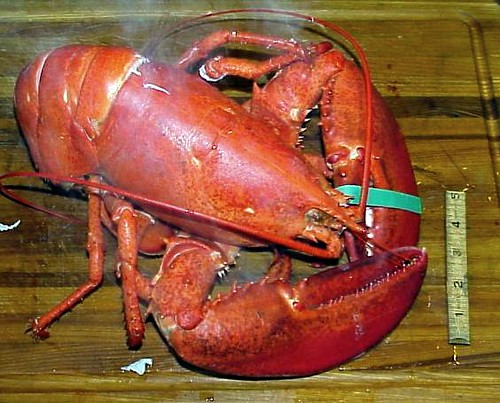 With the summer lobster catch stable but demand dropping, the price of lobster has drifted downward at both the wholesale and retail levels, according to a recent news story on newsday.com.
'At ShopRite in New London and Norwich, owner Ken Capano is selling live lobsters for $5.99 a pound, an "unprecedented" sale price that has lasted six weeks, he said. "The price has come down, but more important, what I'm hearing is, the supply side to supermarket retailers is better because tourist consumption is down in Maine," he said. "So there's been more consistent supply.Although this is good news for consumers, it's making it even tougher for lobster fisherman. The wholesale price of bugs is down more than a dollar a pound, diesel prices are double what they were last year and the price of bait has tripled, putting a tighter squeeze on lobstermen than ever.
"I've never seen anything like it where I'm able to promote lobsters at a reasonable price," he said.'
News reports are saying that the dock prices for lobster are well under $5.00 a pound in Massachusetts and staying around $5.00 a pound in Connecticut and Rhode Island. When we were in southern Maine last weekend, the retail price at lobster shacks from York to Portland was around $5.50 for standard pound-and-a-halfers.
My guess is that lobster prices are going to remain soft for a little while yet - at least through Labor Day. The CBC reports that lobstermen on Prince Edward Island and southern New Brunswick are also getting lower prices for their bugs (C$8 - C$9.50 a kilo) thanks to a combination of great harvest, higher Canadian dollar, and sluggish American economy (lots of Canadian lobsters are sold in the US market.)
.
24 June, 2008
Is This The End of White Lily Flour?
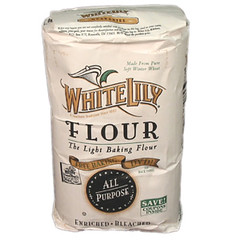 For over a century, White Lily flour has been milled in Knoxville Tennessee using a special process from soft red winter wheat. The unique qualities of the wheat, along with special milling and bleaching processes, make White Lily flour unique - slightly higher in protein than cake flour, but lower than all-purpose flour - and it's status as a regional product found almost exclusively in the South has given it a special niche status as THE flour that southern cooks turn to for tender biscuits and pie crusts, in much the same way that New Englanders turn to King Arthur flour (milled in Vermont.)
Sadly however, 125 years of regional pride and distinction may be on the verge of being lost forever. The company has recently been acquired by the J M Smucker Co., which is shutting down the Knoxville plant and moving milling operations to Smucker's home state of Ohio. Although they have promised that the process for making White Lily flour will be the same as ever - even claiming in a press statement that the new factory has been a secondary producer for White Lily under contract for "generations" - Southern bakers are suspicious and skeptical. In a blind test conducted for a recent New York Times newspaper article, two bakers were able to distinguish the "new" flour in a blind test just by sight and texture. This doesn't bode well for the brand.
I have to admit that I find Smucker's decision to close the Knoxville plant puzzling, coming as it does when people are becoming more aware of local sourcing for their foods and ingredients. There are millions of people in the South who have come to love and trust the White Lily brand, and its status in areas of the country where it is sold is practically elevated to that of myth. Hundreds of thousands of bakers have never used another flour in their entire lives. I just don't understand why Smucker's would jeopardize such a huge and loyal market segment.
If you're passionate about White Lily Flour and want to try to change Smucker's mind about closing the Knoxville mill, I urge you to ignore any ridiculous online petitions that you might find on the internet. Online petitions are worse than worthless: They are ignored by the companies they target, and are not taken seriously by anyone in a position to change policy anywhere. Your best bet is to find some paper, a pen, and a stamp and write to the Customer Service department. Here's Smucker's address:
The J.M. Smucker Co.
1 Strawberry Lane
Orrville, Ohio 44667-0280
You may also choose to click here to visit Smucker's online feedback form at their website.
.
10 June, 2008
Sam 'n' Ella's Tomatoes
 The consumer advisory issued by the FDA against eating certain types of raw red tomatoes continues. From their latest press release:
The Food and Drug Administration is expanding its warning to consumers nationwide that a salmonellosis outbreak has been linked to consumption of certain raw red plum, red Roma, and red round tomatoes, and products containing these raw, red tomatoes.FDA recommends that consumers not eat raw red Roma, raw red plum, raw red round tomatoes, or products that contain these types of raw red tomatoes unless the tomatoes are from the sources listed below. If unsure of where tomatoes are grown or harvested, consumers are encouraged to contact the store where the tomato purchase was made. Consumers should continue to eat cherry tomatoes, grape tomatoes, and tomatoes sold with the vine still attached, or tomatoes grown at home.On June 5, using traceback and other distribution pattern information, FDA published a list of states, territories, and countries where tomatoes are grown and harvested which have not been associated with this outbreak. This updated list includes: Arkansas, California, Georgia, Hawaii, North Carolina, South Carolina, Tennessee, Texas, Belgium, Canada, Dominican Republic, Guatemala, Israel, Netherlands, and Puerto Rico.
 Yet another good reason for everyone to be reading the labels, even on the fruit they buy! Imported fruit will carry the country of origin on those annoying little sticky labels that can be so hard to peel off. Before selecting out-of-season tomatoes, take a close look at the label. The one at right shows that the tomato was grown in Canada, a country not affected by the advisory.
Photo by cdozo, Used under Creative Commons license.
Subscribe to:
Posts (Atom)